Shade doesn’t have to mean dull. After 20+ years of designing Pacific Northwest landscapes, I can tell you that a well-planned shade garden design is often the most striking part of a property. The secret is working with your conditions, not against them. Coral bells, painted ferns, and bleeding hearts thrive where sun-lovers struggle. PNW shade gardening actually gives you a head start – your naturally cool, moist soil conditions are exactly what woodland garden plants crave. You just need the right strategy and plant varieties to bring it all together.
Chris’ Quick Takeaways
- Shade is a design opportunity, not a design problem
- Always map your light patterns before buying a single plant
- Fix your soil first with organic-rich, loose amendments or you are wasting money
- Layer your shade garden like a forest and it will practically maintain itself
- Foliage color and texture carry a shade garden far longer than flowers ever will
- A gurgling pond or garden path turns dead space into the best corner of your property
- The right PNW-native plants, planted at the right time, will outlast anything from a generic nursery
Why Most PNW Shade Gardens Fail Before They Start
The Douglas Fir Problem Nobody Talks About
Douglas firs are magnificent trees. They’re also ruthless competitors. Their dense canopy blocks light while their shallow, aggressive root systems pull moisture and nutrients from surrounding soil. I’ve seen beautifully planted shade gardens wiped out within a season simply because nobody accounted for this.
How Clay Soil and Root Competition Team Up Against You
Western Washington’s glacially compacted clay soil drains poorly, suffocates roots, and stays waterlogged through winter. Add active tree root competition on top of that, and most plants simply give up. WSU Extension confirms this hardpan layer often sits just 18 to 36 inches below the surface, dangerously close to your planting zone.
A Gig Harbor homeowner had replanted the same shady bed three times in four years. Every spring, new plants. Every fall, disappointment. The culprit wasn’t her plant choices. It was unamended clay soil sitting right beneath a 40-year-old fir. One proper soil assessment changed everything.
Planting Sun-Loving Species in the Wrong Spot
This is the most common shade garden mistake I see across Tacoma and Puyallup properties. Climbing roses, lavender, and ornamental grasses look gorgeous at the nursery. Plant them under a canopy and they stretch, yellow, and slowly decline. Shade gardening starts with honest observation, not optimism.
Understand Your Shade Before You Plant a Single Thing
Dappled, Partial, and Deep Shade Are Not the Same
These three shade types produce completely different growing conditions. Treating them as one category is where most landscape design plans fall apart. Here’s what each actually means for your plants:
- Dappled shade sits under open tree canopies where light flickers through. Coral bells, bleeding hearts, and painted ferns love this spot.
- Partial shade means 3 to 6 hours of direct sun daily. A wider range of shade plants and even some partial shade perennials thrive here.
- Dense shade gets under 3 hours of direct light. Your plant varieties list gets shorter, but sweet woodruff, ostrich ferns, and miniature hostas handle it well.
How to Map Light Patterns Across Your Property
I always tell homeowners to spend one full day just watching their yard before buying a single plant. Walk outside at 8am, noon, and 4pm and note exactly where sun hits and where it doesn’t. Then mark it down.
In 2023, a University Place couple in their early 40s hired us after two failed attempts at a woodland garden. They’d skipped the light mapping step entirely. A single observation day revealed their “full shade” bed actually received nearly five hours of afternoon sun. We redesigned around partial shade species and the garden thrived.
Seasonal Shifts That Change Everything in the PNW
Tacoma receives around 41 inches of rain annually, and our deciduous trees completely change your shade picture between seasons. That deep shade spot in July may get generous winter and spring light once the canopy drops. Native shade trees like big-leaf maple create dramatically different conditions across the year, so map your light in both summer and late autumn.
Fix Your Soil First or Waste Your Money on Plants
What PNW Shade Soil Needs
Shade soil in the Pacific Northwest tends to be compacted, nutrient-poor, and either bone dry under conifers or waterlogged in low spots. Before any planting happens, I always assess the soil first. A few things that a healthy shade garden soil actually needs:
- Organic matter added at roughly 2 inches, thoroughly incorporated into 6 to 8 inches of existing soil
- Proper drainage addressed through soil amendment before planting, not after losing plants
- Balanced pH between 5.5 and 6.5, which suits most PNW shade-loving plants including rhododendrons and coral bells
- Loose, aerated structure that lets shallow-rooted shade plants establish without fighting compaction
Amending Under Established Tree Roots Without Hurting Them
This is genuinely tricky, and getting it wrong damages trees you’ve spent decades growing. I never recommend deep tilling anywhere near established root zones. Instead, work compost and soil amendment gently into the top few inches, staying well clear of large surface roots. A garden knife works well for careful hand-amendment between roots without causing serious damage.
A Tacoma homeowner near Point Defiance, a retired contractor with a serious pride of ownership, wanted a lush shade garden beneath three mature big-leaf maples. He’d already tried rototilling the area himself. We came in, assessed the root damage, and rebuilt the bed using surface-applied potting soil and compost layering. Two seasons later, his ostrich ferns and Hydrangea arborescens ‘Annabelle’ were thriving.
Dry Shade vs. Wet Shade, Two Very Different Fixes
Dry shade sits under dense conifer canopies where rain rarely penetrates and root competition is fierce. Wet shade collects in low-lying spots that stay saturated through our long PNW winters. Treating them the same way guarantees failure. Here’s how I approach each:
- Dry shade fix involves drought-tolerant species selection, generous organic mulch, and an irrigation drip system to supplement rainfall under canopy
- Wet shade fix requires improved drainage through soil amendment, raised planting pockets, and moisture-tolerant species like primula japonica and New York ferns
Build Your Shade Garden Design in Layers Like a Forest
The Canopy and Understory Layer
The most beautiful shade gardens I’ve designed all share one thing. They mimic how a real Pacific Northwest forest actually works. Nature already perfected this system, and your job is simply to replicate it on a smaller scale. Tacoma’s urban tree canopy sits at just 21%, so many properties are actually working with partial canopy rather than full coverage, which gives you more flexibility than you’d expect.
The Shrub and Mid-Level Layer
A young couple bought their first home in Puyallup in 2022. The backyard had one large native shade tree and nothing else underneath it. We introduced a mid-level layer of Hydrangea quercifolia, Pieris floribunda, and Philadelphus lewisii. Within one season, that bare dirt patch became a structured, layered woodland garden they actually used.
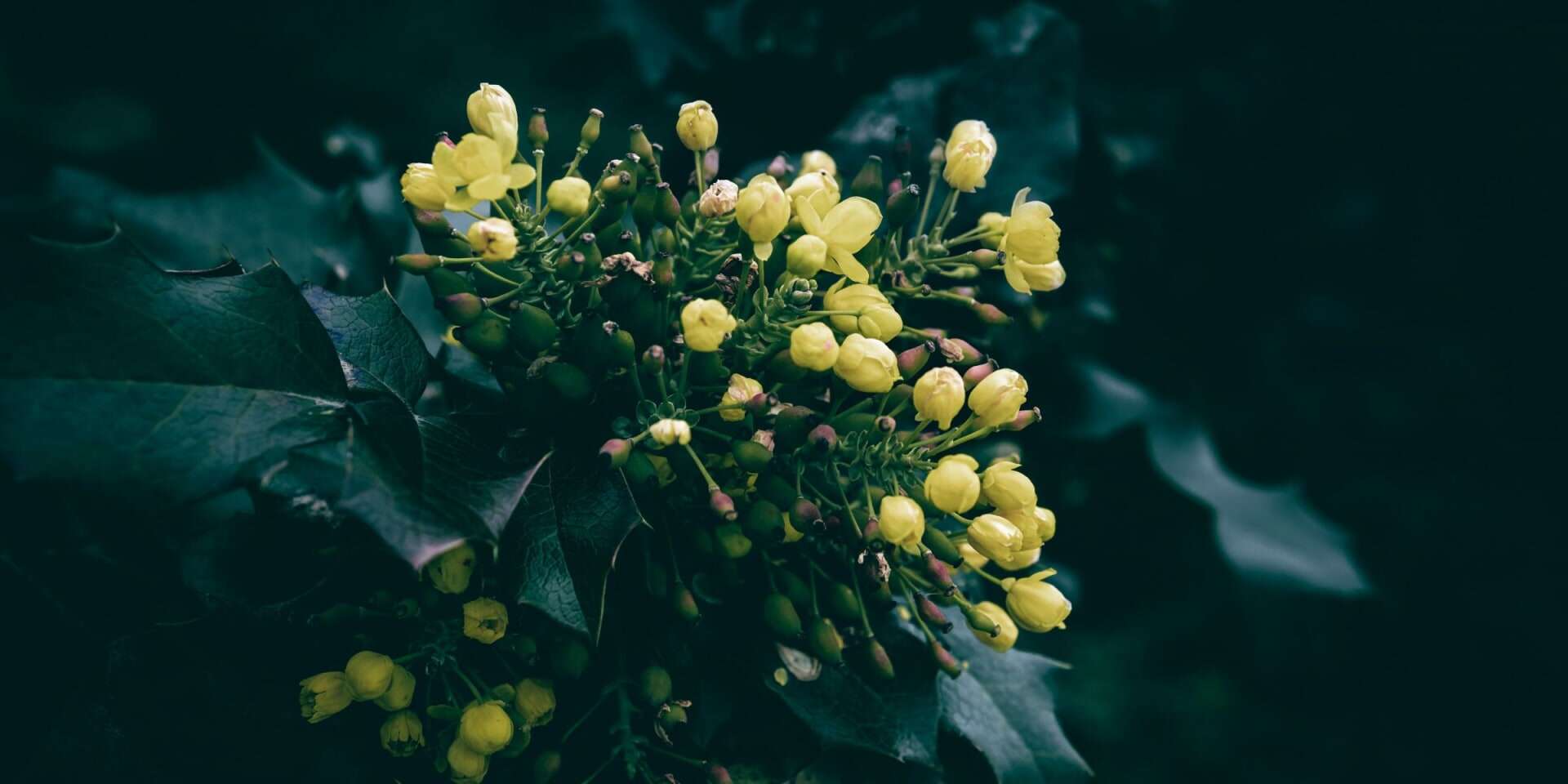
This shrub layer is where your shade garden design gains real structure and seasonal interest. Shade shrubs like Rhododendron vaseyi, Vaccinium corymbosum, and Ceanothus americanus all perform brilliantly in PNW conditions. I typically space them to allow ground cover plants room to fill in below while woody plants mature above.
Ground Covers and the Forest Floor Layer
This bottom layer does more work than most homeowners realize. It suppresses weeds, retains soil moisture, and gives the whole garden a finished, intentional look year-round. Sweet woodruff spreads beautifully under shrubs, while native ground covers connect the whole design into something that feels completely natural rather than assembled.
The Best Plants for PNW Shade Gardens
Shade Perennials That Thrive in Tacoma and Gig Harbor
After 500+ projects across Tacoma, Gig Harbor, and Puyallup, these are the perennials I reach for first in shade situations. They’re proven, locally reliable, and genuinely beautiful.
- Bleeding hearts bloom generously in dappled shade and return stronger every spring
- Coral bells (Heuchera spp. and cvs.) offer incredible foliage color range from lime green to deep burgundy
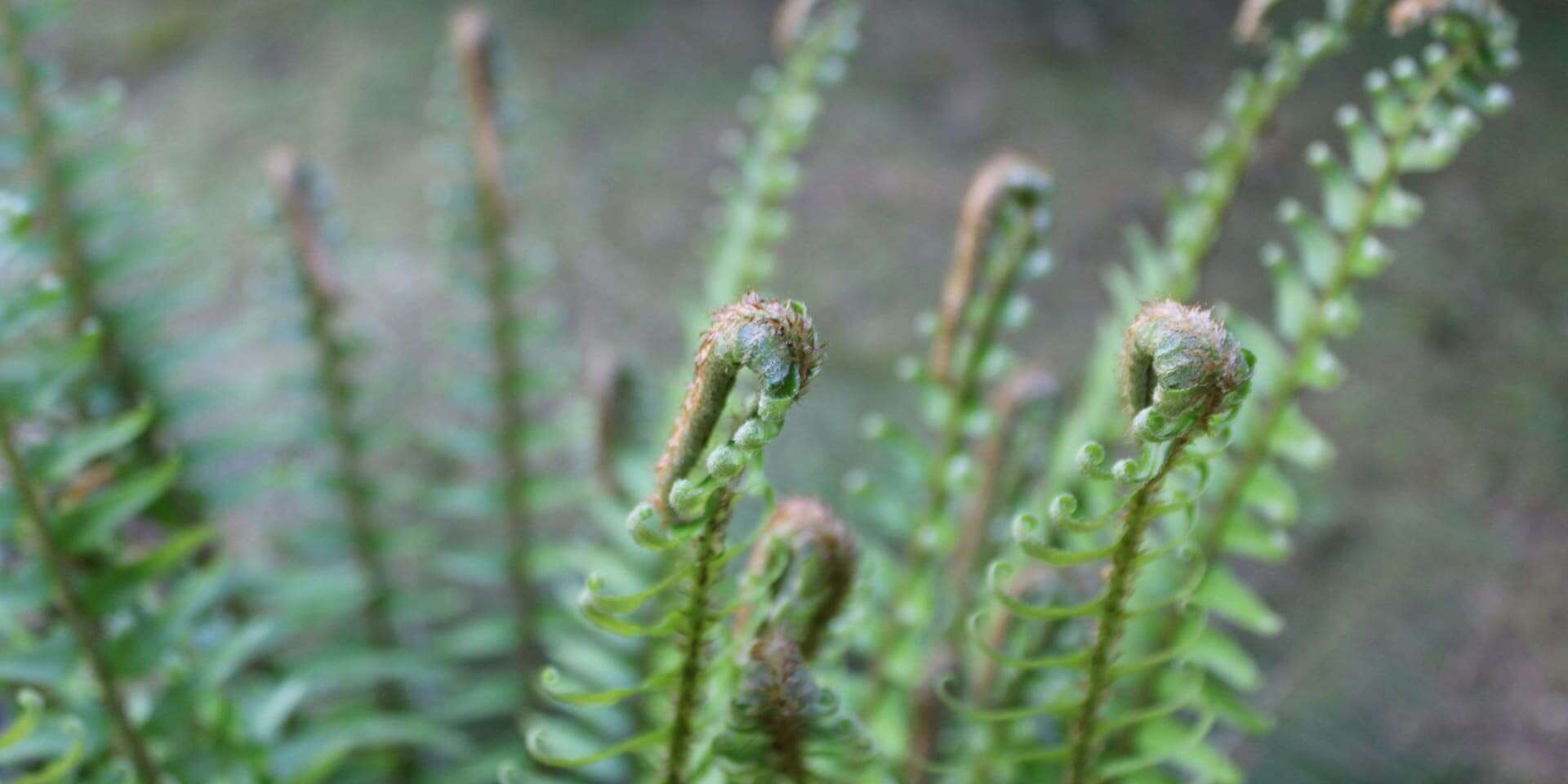
- Painted fern brings silvery, arching texture that catches whatever light filters through
- Aquilegia canadensis attracts native pollinators while thriving in partial shade conditions
- Hosta spp. and cvs. remain the most dependable shade perennial I know, especially miniature hostas in tighter spaces
Native Shrubs Built for Northwest Conditions
Native shrubs are my first recommendation for any PNW shade garden, and for good reason. WSU Extension research confirms that native plants support dramatically higher pollinator diversity than ornamental alternatives. Nearly one in four native bee species is currently at risk, making these plant choices genuinely meaningful beyond just aesthetics.
- Philadelphus lewisii produces fragrant white blooms and handles partial shade beautifully
- Vaccinium corymbosum gives you edible blueberries alongside excellent fall color
- Rhododendron vaseyi thrives in acidic PNW soils and delivers stunning spring flowers
- Ceanothus americanus fixes nitrogen naturally, improving surrounding soil conditions over time
Ground Covers That Actually Spread and Suppress Weeds
A busy professional couple in Tacoma’s North End, both in their late 40s, were spending entire weekends battling weeds beneath their mature tree canopy. Their priority was simple: less maintenance, more living. We planted a dense combination of sweet woodruff and Polystichum acrostichoides throughout the bed. Within two growing seasons, the weeds were gone and so were their weed-pulling weekends.
Ground covers are the hardest-working plants in any shade garden. Sweet woodruff spreads reliably, smells wonderful when brushed, and outcompetes most weeds without any help from you. Thelypteris noveboracensis and Matteuccia struthiopteris both naturalize aggressively under PNW conditions, filling gaps and creating that lush, effortless woodland floor look.
Foliage-First Plants for Year-Round Visual Interest
Flowers in shade gardens are fleeting. Foliage texture is what carries the design through all four Northwest seasons. I always build shade garden designs around foliage first, with blooms as a bonus rather than the main event. Rodger’s flower, Syneilesis aconitifolia, and Garden Glow varieties add dramatic leaf shapes and winter interest plants that keep the garden looking intentional even in January.
Table: PNW Shade Plant Quick Reference Guide
| Plant | Shade Type | Soil Preference | Mature Height | Benefit | Deer Resistant |
|---|---|---|---|---|---|
| Hosta spp. and cvs. | Partial to Deep | Moist, rich | 6in to 36in | Bold foliage, low maintenance | No |
| Heuchera spp. and cvs. | Dappled to Partial | Well-drained | 12in to 18in | Year-round foliage color | Yes |
| Matteuccia struthiopteris | Partial to Deep | Moist, fertile | 3ft to 5ft | Dramatic vase shape, spreads naturally | Yes |
| Bleeding Heart | Dappled to Partial | Rich, moist | 18in to 36in | Early spring color, self-seeds | Yes |
| Aquilegia canadensis | Dappled | Well-drained | 12in to 24in | Native pollinator magnet | Yes |
| Sweet Woodruff | Partial to Deep | Moist to dry | 6in to 12in | Dense weed suppression, fragrant | Yes |
| Hydrangea quercifolia | Partial | Well-drained | 4ft to 6ft | Multi-season interest, exfoliating bark | Yes |
| Primula japonica | Partial | Wet to moist | 12in to 18in | Candelabra blooms, loves wet shade | No |
| Polystichum acrostichoides | Partial to Deep | Average, well-drained | 18in to 24in | Evergreen, extremely tough | Yes |
| Vaccinium corymbosum | Partial | Acidic, moist | 4ft to 6ft | Edible fruit, brilliant fall color | No |
| Lobelia siphilitica | Partial | Moist to wet | 24in to 36in | Late summer blue color, native | No |
| Rhododendron vaseyi | Partial | Acidic, well-drained | 5ft to 8ft | Early spring blooms, PNW native | Yes |
Get Color and Texture Into Your Shade Garden Design
Foliage Color Does More Work Than Flowers in Shade
Most homeowners come to me wanting flowers in their shade garden. I gently redirect them toward foliage every single time. A 2024 meta-analysis published in Systematic Reviews confirmed what experienced gardeners already know: spending time in a thoughtfully designed garden delivers measurable improvements in mental well-being and quality of life. Rich, varied foliage color creates that calming visual experience all year, long after any bloom has faded.
How to Combine Leaf Textures for Visual Depth
Foliage texture is the design tool most people overlook completely. I pair bold, broad hosta leaves against the delicate filigree of painted fern, then add the upright, architectural form of Matteuccia struthiopteris behind both. That layered contrast creates genuine visual depth even in a full shade garden with zero flowers in sight.
A Gig Harbor grandmother wanted a low-maintenance shade garden her grandchildren would actually find interesting. No fussy flowers, just year-round texture and color. We built the entire design around shade-loving silvery plants, deep burgundy Heuchera americana, and bold ostrich ferns. She told us it looked like a living painting every single season.
Seasonal Bloom Planning for a PNW Shade Garden
The goal is a rolling sequence of color from February through October, not one spectacular week followed by months of green. I start with bleeding hearts and Aquilegia canadensis in early spring, move into Campanula persicifolia and Primula japonica through summer, then rely on Lonicera sempervirens and Lobelia siphilitica to carry late-season interest. Euphorbia commutata bridges early spring beautifully with its chartreuse, long-lasting bracts.
Add Hardscape Features That Make Shade Gardens Feel Intentional
Paths and Stepping Stones That Invite You In
A shade garden without a path feels like a painting you can’t enter. A well-placed garden path in native stone draws people in, creates a visual experience that feels intentional, and gives the whole design a sense of purpose. I always say the path comes first, then the planting plan wraps around it.
Water Features That Work Double Duty in Low Light
A University Place family with three young kids had a dark, unused side yard they’d written off entirely. The father, a physician in his mid-40s, wanted something calming he could actually see from his home office window. We installed a gurgling pond with native stone edging and shade-tolerant planting around it. He told us it became the most-used corner of the entire property within weeks.
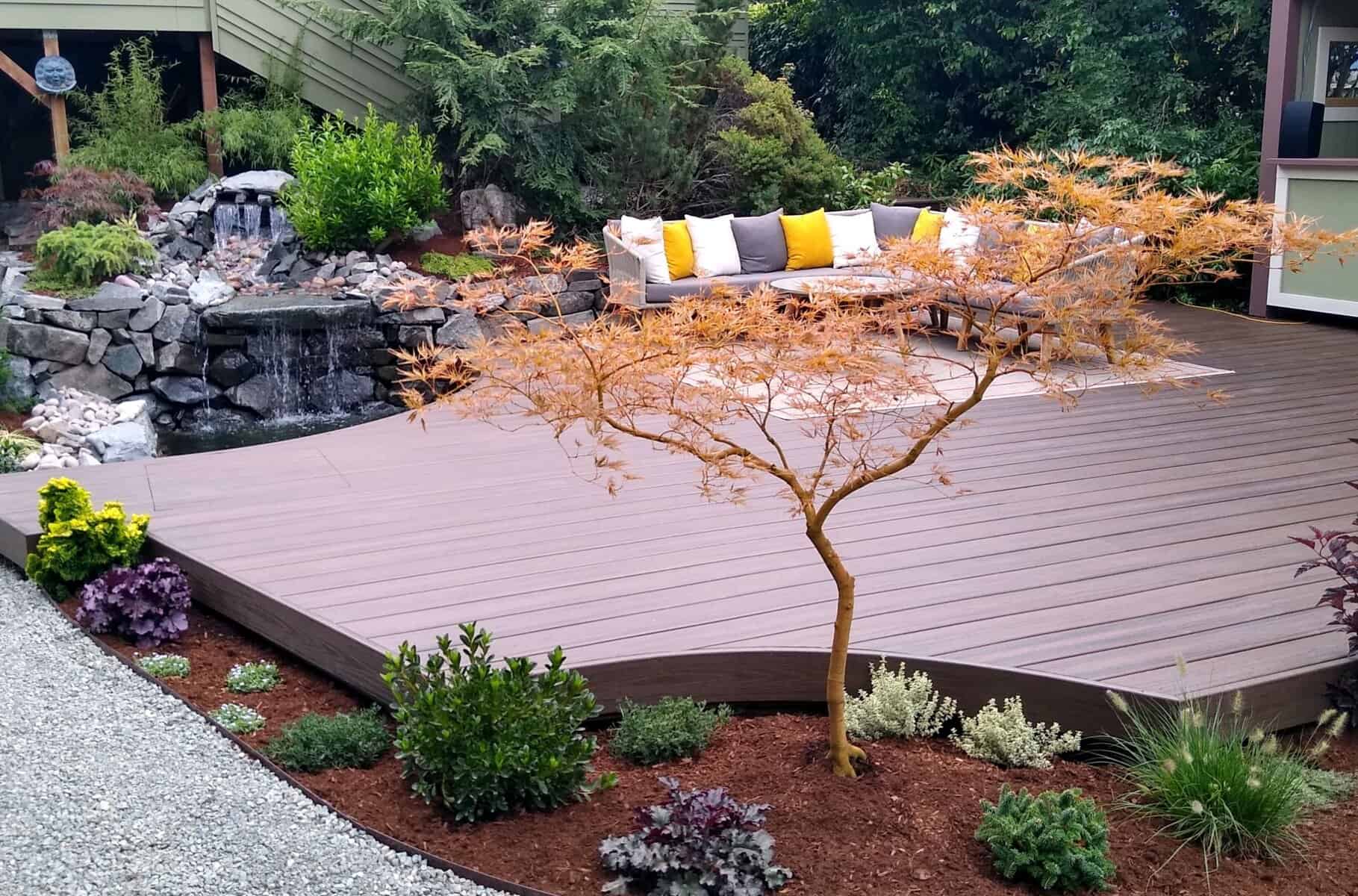
A gurgling pond or small water garden does something lighting design simply cannot replicate in a shaded space. The sound of moving water adds a sensory layer that makes the whole garden feel alive, even on a grey PNW afternoon. Research published in ScienceDirect confirms that artificial water features like ponds and fountains deliver genuine psychological benefits including measurable stress restoration.
Seating Areas That Turn Dead Space Into Living Space
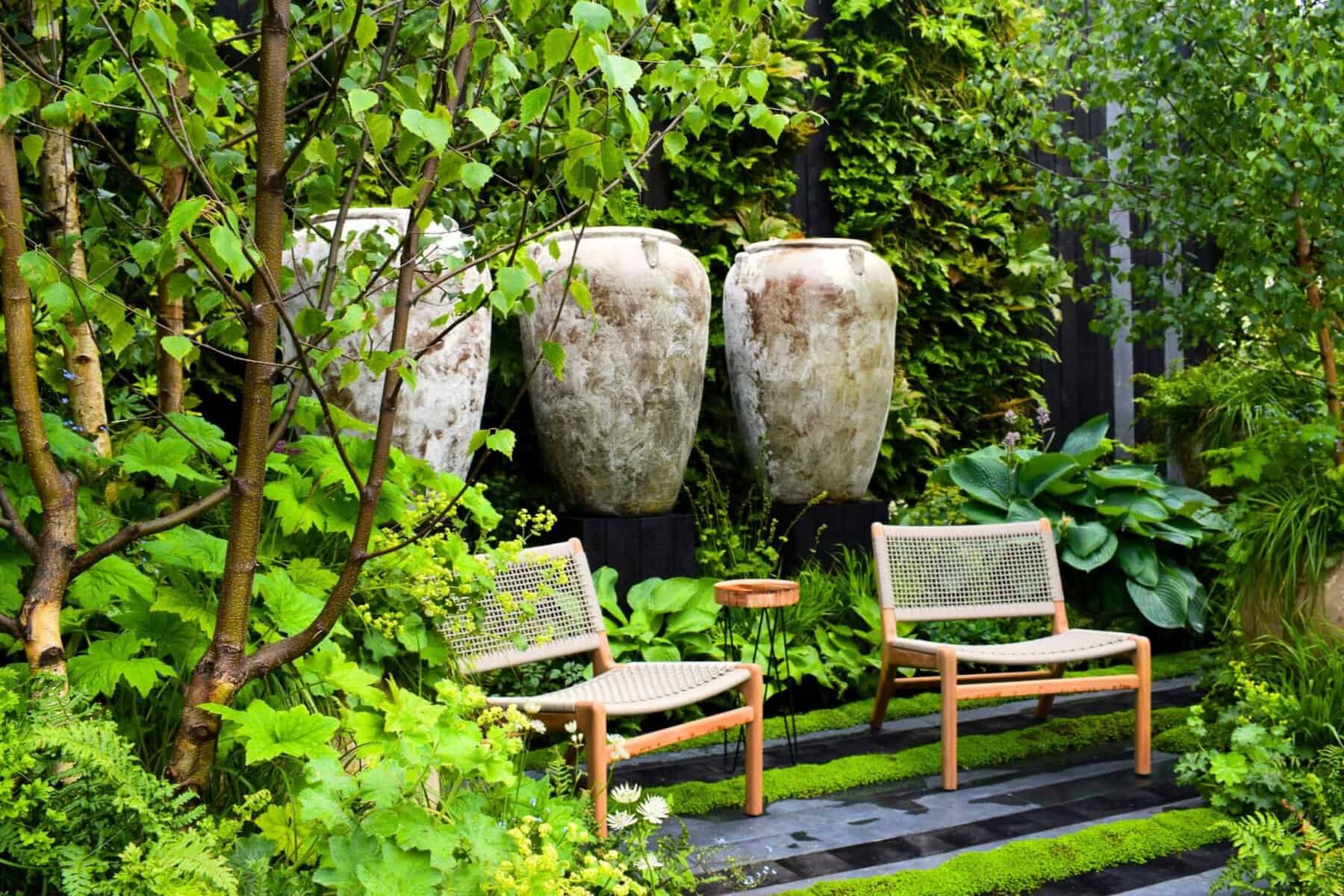
Shaded dead space is actually premium real estate waiting to be claimed. I’ve converted dozens of dark, neglected corners across Tacoma and Gig Harbor into genuine garden rooms that families use year-round. A simple seating area with custom-crafted carpentry features, surrounded by lush container gardens and potted plants, completely reframes how a family experiences their outdoor space.
Maintain a Shade Garden the Right Way Through PNW Seasons
Spring Planting Timing in Tacoma’s Climate
Tacoma’s below-freezing temperatures are largely confined to December through February, which means spring planting windows open earlier here than most of the country realizes. I typically start installing shade perennials in mid-March, giving plants a full cool, moist season to establish roots before summer dry-down begins. Getting this timing right makes an enormous difference in first-year survival rates.
Summer Watering Under Conifer Canopies
A retired schoolteacher in her early 60s in Tacoma’s Proctor District had a gorgeous spring shade garden that collapsed every August without fail. She assumed shade plants simply didn’t need much water. The reality was her Douglas fir canopy was intercepting nearly all rainfall, leaving the soil beneath bone dry. We installed an irrigation drip system targeted specifically at the root zones beneath the canopy. Problem solved permanently.
Summer is where most PNW shade gardens quietly struggle. Conifer canopies intercept rainfall so effectively that soil beneath them can reach drought conditions even during rainy stretches. Drought-tolerant species help, but an irrigation drip system is genuinely the most reliable solution I recommend for established shade gardens under dense tree cover.
Fall Cleanup Habits That Set Up Next Year’s Garden
Fall garden maintenance in a PNW shade garden is less about cutting everything back and more about being selective. I leave ornamental fern fronds standing through winter because they provide genuine winter interest and protect crowns from frost. Removing fallen leaves from ground cover beds, refreshing mulch layers, and cutting back only the truly spent perennials sets the entire garden up for a stronger spring emergence.
Table: PNW Shade Garden Seasonal Maintenance Calendar
| Season | Timing in Tacoma | Priority Tasks | What to Plant | What to Avoid |
|---|---|---|---|---|
| Late Winter | February to March | Soil amendment, bed preparation, drip irrigation check | Bleeding hearts, primula japonica | Deep tilling near tree roots |
| Early Spring | March to April | New plant installation, mulch refresh, edge beds | Hostas, coral bells, painted ferns | Planting sun-lovers in shade spots |
| Late Spring | April to May | Divide overcrowded perennials, add container gardens | Aquilegia canadensis, sweet woodruff | Overwatering newly established plants |
| Early Summer | June | Activate irrigation drip system, monitor dry shade zones | Campanula persicifolia, lobelia siphilitica | Letting soil dry completely under conifers |
| Midsummer | July to August | Deep watering under canopy, check for root competition stress | Drought-tolerant ground covers | Heavy fertilizing in heat |
| Early Fall | September | Refresh mulch, plant spring-blooming bulbs between perennials | Native shrubs, woody plants | Cutting back ferns and winter interest plants |
| Late Fall | October to November | Selective cleanup, leave protective foliage standing | Vaccinium corymbosum, shade shrubs | Full bed clearance that exposes bare soil |
| Winter | December to January | Assess garden structure, plan spring additions, order plants | Plan container gardens for spring | Disturbing dormant root zones |
How Father Nature Landscapes Builds Shade Gardens That Last
Our Approach to Tacoma’s Toughest Outdoor Spaces
We don’t treat shade as a problem to work around. We treat it as the starting point for some of the most beautiful outdoor sanctuaries we’ve ever built across Tacoma, Gig Harbor, and Puyallup. Our comprehensive design-build-maintain approach means one trusted team handles everything from initial soil assessment through to seasonal garden maintenance.
- Detailed site assessment before any plant selection happens
- A scaled conceptual landscape design so you see the finished plan before we break ground
- Premium materials and regionally proven plant varieties throughout
- Ongoing maintenance plans that keep your shade garden thriving year-round
What 20+ Years of PNW Landscape Work Teaches You About Shade
Over 500 completed projects across the Pacific Northwest teaches you things no textbook covers. We’ve worked through every soil condition, every canopy type, and every microclimate this region produces. That accumulated knowledge is what separates a shade garden that thrives from one that merely survives.
- 200+ five-star reviews from Tacoma and Gig Harbor homeowners
- Licensed, bonded, insured, and background-checked professional crews
- As Seen On HGTV and recognized with Best of Houzz and BBB A+ ratings
- Uniformed teams who arrive on schedule, every single time
Schedule Your Free Shade Garden Consultation Today
Your shaded outdoor space has more potential than you realize. We’d love to show you exactly what’s possible. Call us at (253) 761-6437 or book online now to schedule your free consultation and take the first step toward a shade garden you’ll genuinely love.
Frequently Asked Questions
1. What is the best soil mixture for a PNW shade garden?
A rich soil mixture of compost, aged bark, and native topsoil works best in Pacific Northwest shade conditions. Aim for loose, well-draining structure that retains just enough moisture without staying waterlogged through our wet winters.
2. Can I use artificial lighting to help plants grow in a full shade garden?
Artificial lighting can supplement very low light conditions for certain shade plants, particularly in covered patio areas or under deep canopies. It works best as a support tool rather than a primary light source for outdoor shade gardening.
3. How do I handle water runoff in a sloped shade garden?
Water runoff on sloped shade garden beds erodes soil and prevents plants from establishing properly. Installing a proper irrigation system alongside strategic ground cover planting significantly reduces runoff while keeping moisture where your plants actually need it.
4. Which plant zones apply to Tacoma and Gig Harbor shade gardens?
Tacoma and Gig Harbor fall primarily within USDA plant zones 8a and 8b. This gives us a generous growing range that supports a wide variety of shade perennials, native shrubs, and woodland ground covers year-round.
5. Does May Wine sweet woodruff spread aggressively in PNW shade gardens?
May Wine sweet woodruff spreads reliably in moist, shaded PNW conditions, which is actually what makes it so useful as a ground cover. I recommend containing it with edging if you want to prevent it from moving into neighboring beds.
6. What garden containers work best for shaded outdoor spaces?
Heavyweight garden containers in stone, ceramic, or powder-coated metal hold up best through PNW winters in shaded spots. I use container gardens strategically to add color, height variation, and seasonal flexibility in areas where in-ground planting is difficult.
7. Can Hydrangea arborescens ‘Annabelle’ handle deep shade in the Pacific Northwest?
Hydrangea arborescens ‘Annabelle’ tolerates partial to moderate shade very well and performs reliably across Tacoma and Gig Harbor properties. It produces its best blooms with at least three hours of indirect light, making it ideal for dappled shade situations.
8. Is Juniperus procumbens ‘Nana’ a good choice for shaded PNW garden edges?
Juniperus procumbens ‘Nana’ actually prefers full sun and struggles in deep shade conditions, so I rarely recommend it for true shade garden edges. It works beautifully, however, at the sunny transition zones where a shade garden meets a more open area of the property.
9. How do I protect a shade garden from deer damage in Tacoma neighborhoods?
Deer pressure is a real concern across many Tacoma and Gig Harbor properties, particularly those bordering green belts. A well-placed deer fence combined with naturally deer-resistant shade plants like astilbe, bleeding hearts, and ferns significantly reduces browsing damage without compromising the garden’s visual appeal or garden decor.
10. Can I add garden ornaments and decorative features to a shade garden without it looking cluttered?
Garden ornaments work beautifully in shade gardens when used with restraint and placed to draw the eye through the space intentionally. I recommend one or two anchor pieces in natural materials like stone or aged metal rather than scattering multiple decorative items throughout the planting beds.
Conclusion
Shade doesn’t limit your outdoor space. It defines it, when you know what you’re doing. At Father Nature Landscapes, we’ve spent 20+ years turning Tacoma’s most challenging shaded properties into genuine outdoor sanctuaries. We understand the soil, the climate, and the plants that actually perform here. Ready to stop guessing and start growing?
Book your free consultation today and let’s build something beautiful together.