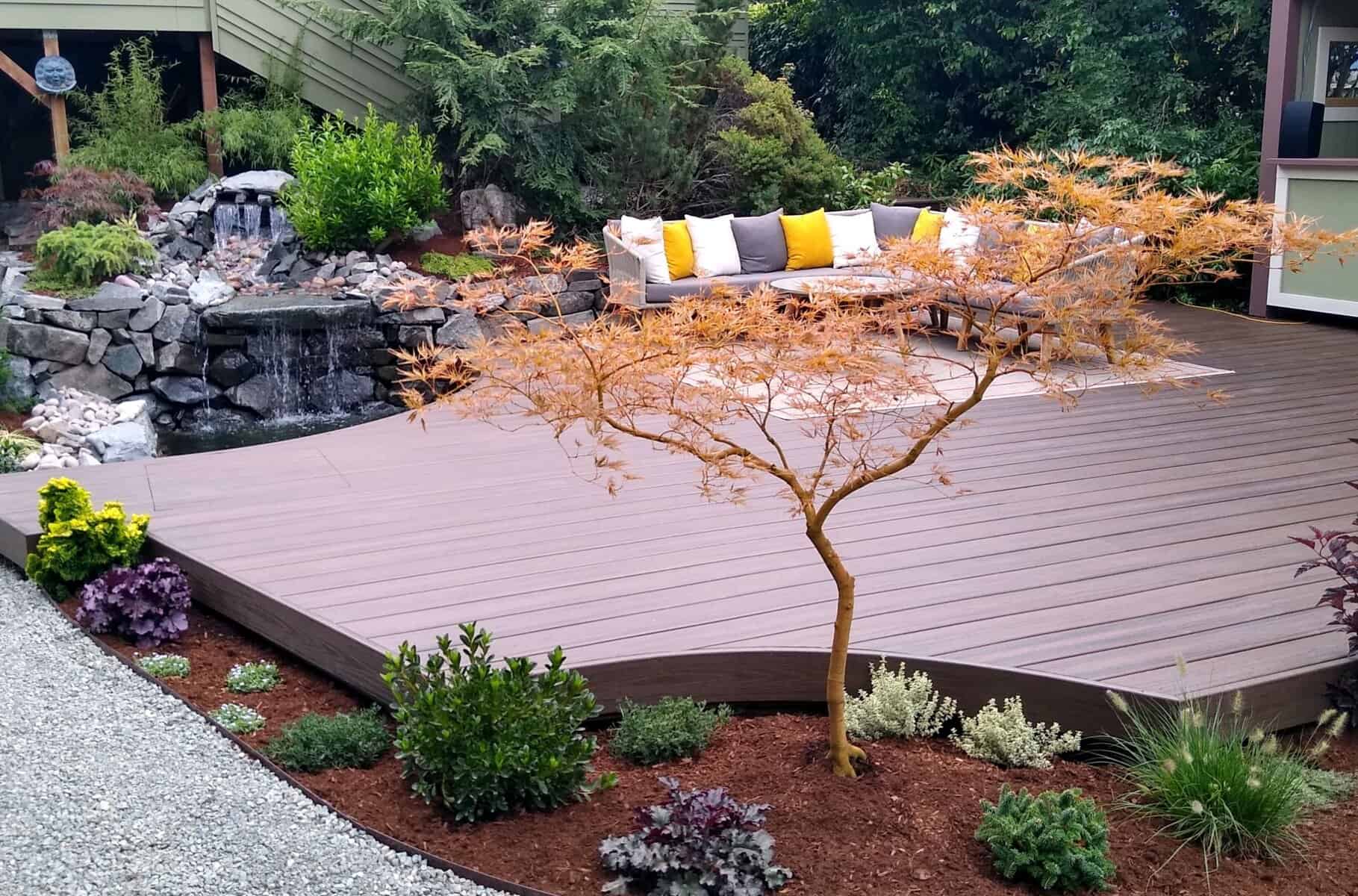
Your Tacoma backyard has more potential than you think. Outdoor living space design is simply the process of turning an underused yard into a functional, beautiful extension of your home, one your family actually spends time in. After 20 years and 500+ projects across Tacoma, Gig Harbor, and Puyallup, I’ve seen what works and what wastes money. The Pacific Northwest climate is more forgiving than people assume. With the right outdoor spaces, right materials, and right layout, you get a space that works year-round, not just on sunny summer weekends.
Chris’ Quick Takeaways
- The PNW climate is more forgiving than you think, the right design makes your Tacoma backyard usable well beyond summer.
- Always define how you will use your space before choosing a single material or feature.
- Zone your outdoor areas deliberately. A primary gathering zone anchors everything else around it.
- Match your hardscape materials to our climate. Porcelain pavers and composite decking outperform cheap alternatives in wet conditions.
- Native PNW plants are not a compromise. They are genuinely the smartest, lowest-maintenance choice for this region.
- Features like water features, landscape lighting, and fire pits are not luxuries. They are what make a space feel complete and get used daily.
- A professional design process with a conceptual landscape design saves you money. Mistakes on paper cost nothing. Mistakes in the ground cost plenty.
Why Most Tacoma Backyards Are Wasted Potential
Pacific Northwest Climate Works in Your Favor More Than You Think
Most people assume Tacoma’s rain makes outdoor living impractical. I’d push back on that. Yes, we get around 173 rainfall days a year according to NOAA climate records, but our summers are genuinely spectacular. From June through September, rainfall drops to under an inch per month. That window, combined with long daylight hours, gives you real outdoor living time. The right design makes the most of every dry day.
What Homeowners Actually Regret About Their Outdoors
After 20 years and 500+ projects, I hear the same regrets repeatedly. Homeowners wish they had started sooner, planned better, or hired a professional instead of guessing. The most common frustration is spending money on outdoor furniture and decor for a space that was never properly designed in the first place. A poorly laid out outdoor area stays uncomfortable regardless of how much you spend decorating it. Good outdoor living space design fixes the foundation first.
How Much Property Value a Well-Designed Backyard Can Add
This is where the numbers get genuinely exciting. According to the National Association of REALTORS 2023 Remodeling Impact Report, standard landscape maintenance alone recovers 217% of its cost at resale. A well-executed overall landscape upgrade averaging $9,000 returns 100% at resale. I worked with a University Place couple in their mid-50s whose backyard had sat untouched for over a decade. After a full outdoor living space redesign with natural stone, a covered patio, and layered plantings, their home appraised noticeably higher than comparable neighborhood properties. The backyard went from a liability to a genuine selling point.
Start Your Outdoor Living Space Design by Defining How You Will Use It
Entertaining vs. Retreating vs. Both
Before a single paver gets laid, I always ask one question: how do you actually want to feel in this space? Your answer shapes everything. Entertaining-focused outdoor spaces need flow, defined zones, and room for people to move. Retreat-focused spaces prioritize privacy, soft planting, and quiet seating areas. Most Tacoma homeowners I work with want both, and that is completely achievable with thoughtful outdoor living space design from the start.
How Your Family Size Shapes the Layout
A couple in their 40s with grown kids has completely different needs than a family with three children under ten. Family size directly determines how your outdoor areas get zoned and what features make sense. Below is a quick guide:
- Solo or couple: Intimate seating area, outdoor bar, low-maintenance garden patios
- Young family: Flat lawn space, durable hardscape, safe sight lines from the kitchen
- Entertaining household: Multiple zones, an outdoor kitchen or bbq area, generous dining space
- Multigenerational: Varied seating heights, accessible pathways, flexible gathering spots
Getting this right early saves you from redesigning in five years.
Matching the Space to Your Daily Routines
A Gig Harbor homeowner I worked with in 2022 kept describing her dream backyard. After a few questions it became clear she wanted her morning coffee outside, not a weekend party space. That changed the entire outdoor living space plan. Think about when you are actually home, what time of day you go outside, and what you do there. A space designed around your real routine gets used every day, not just occasionally.
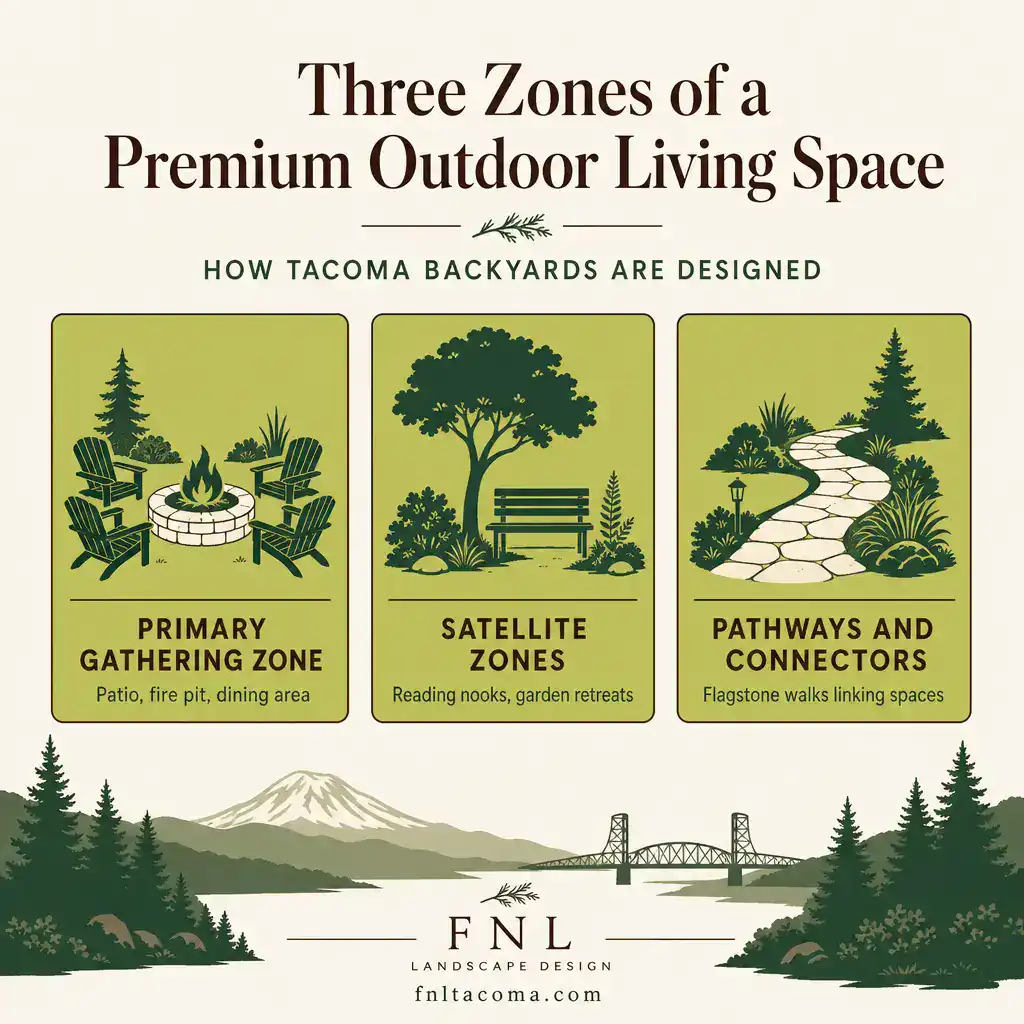
Every premium outdoor living space starts with these three zones — and the connections between them.
Zone Your Backyard Like a Professional Designer Would
1. Primary Gathering Zone
Frederick Law Olmsted, the father of American landscape architecture, once said that scenery employs the mind without fatigue and enlivens it at the same time. That principle applies directly to backyard zoning. Every well-designed outdoor living space has one primary gathering zone that everything else revolves around. This is usually a covered patio, a fire pit area, or an outdoor dining room. It gives the space a clear identity. Get this zone right, and the rest of the layout follows naturally.
2. Satellite Zones
Think of satellite zones as supporting characters. They add function and personality without competing with your primary space. A tucked-away reading nook, a bbq area positioned near the house, a small water feature along a fence line, or a garden area in a sunny corner all serve specific purposes. I worked with a Puyallup family whose backyard felt chaotic despite having good bones. The fix was simple: we defined three distinct satellite zones using natural stone edging and low plantings, and the whole space instantly felt intentional.
How to Use Pathways to Connect Zones Naturally
Pathways do more than connect points A and B. They guide how people move through your outdoor spaces, control traffic flow, and create a sense of rhythm in the landscape. I always recommend at least 36 inches of pathway width between zones so movement feels comfortable rather than squeezed. Materials matter too. Repeating the same natural stone or composite decking used in your primary zone through the pathway ties the whole design together visually without any extra effort.
Pick the Right Hardscape Materials for the PNW Climate
Not All Pavers Hold Up to Tacoma Winters
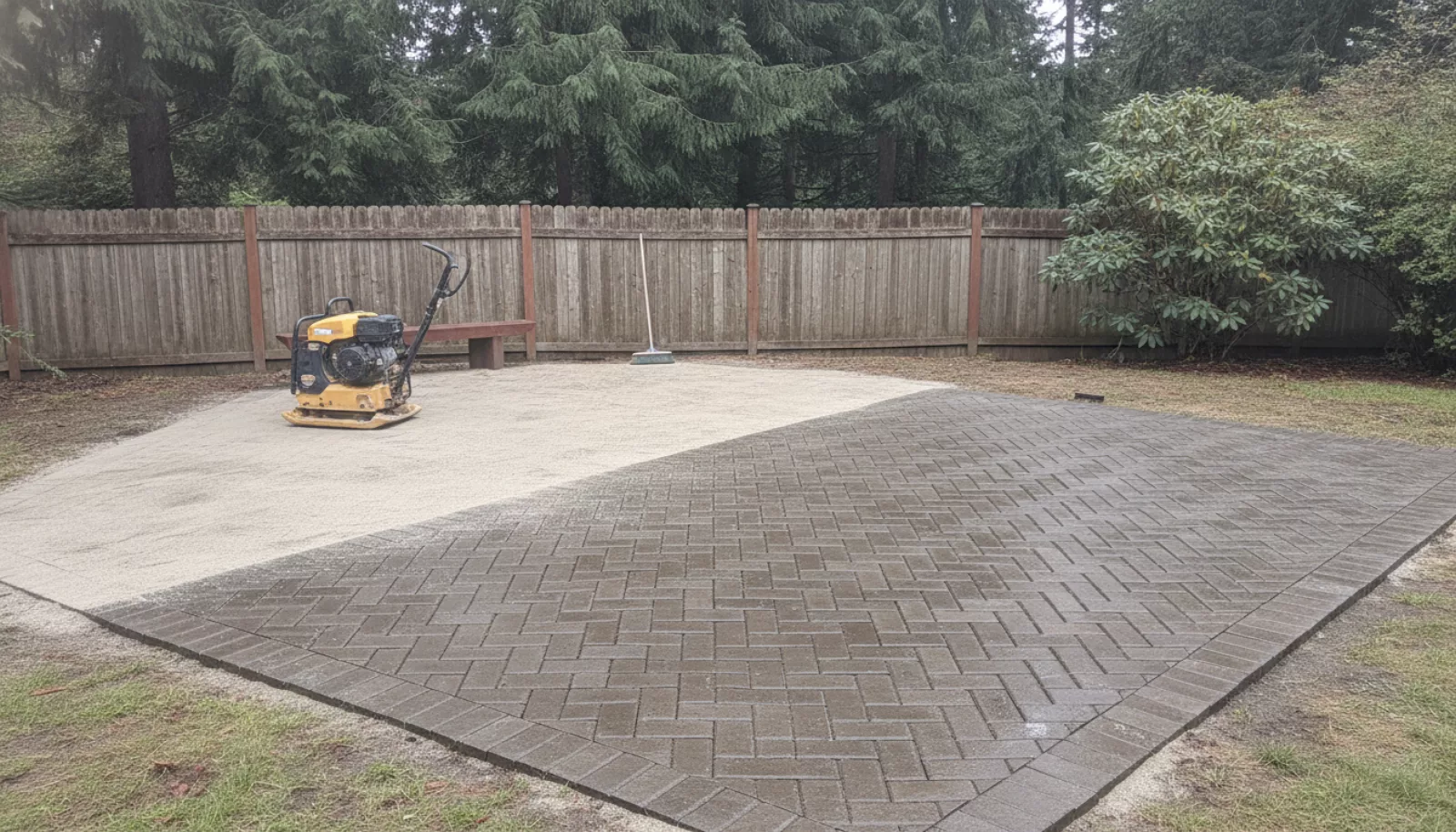
Tacoma averages nearly 173 rainfall days per year, and that moisture cycles through your hardscape constantly. Budget pavers installed without proper base preparation shift, crack, and grow moss within a few seasons. I have seen homeowners spend good money on materials that looked beautiful in spring and resembled a hiking trail by February. The Puget Sound’s freeze-thaw cycles are mild compared to eastern Washington, but they still punish poorly installed hardscape. Material quality and base preparation are equally important.
Natural Stone vs. Concrete vs. Porcelain
Each material has a genuine place in outdoor living space design, and the right choice depends on your priorities. Here is how I think about it for PNW conditions:
- Natural stone: Timeless, beautiful, slip-resistant when textured. Stone patios properly installed last 50+ years. Higher upfront cost but almost zero replacement cost.
- Concrete pavers: Affordable and versatile. Prone to cracking in sustained wet conditions without a solid compacted base.
- Porcelain pavers: Increasingly popular in premium outdoor spaces. Stain-resistant, frost-resistant, and virtually low-maintenance. Pairs beautifully with composite decking for a cohesive contemporary look.
For most Tacoma properties I work on, natural stone or porcelain delivers the best long-term value.
Decking Options That Handle Rain Without Constant Upkeep
A University Place homeowner in his early 60s came to me frustrated after refinishing his pressure-treated wood deck for the fourth time in eight years. We replaced it with capped composite decking, and he has not touched it since beyond a basic wash. High-quality composite decking lasts 25 to 50 years with minimal care, according to Decks.com. It handles PNW moisture without warping, splintering, or fading. For Tacoma backyards, composite is simply the most practical long-term decking choice available.
Table: Hardscape Material Comparison Guide for Pacific Northwest Climates
| Material | Lifespan | Maintenance Level | Slip Resistance | Best For | PNW Suitability |
| Natural Stone | 50+ years | Low (occasional sealing) | High (textured) | Patios, walkways, fire pit areas | Excellent |
| Porcelain Pavers | 30-50 years | Very Low | Medium-High | Contemporary patios, pool surrounds | Excellent |
| Concrete Pavers | 25-40 years | Medium | Medium | Budget-friendly patios, driveways | Good with proper base |
| Composite Decking | 25-50 years | Very Low | Medium | Decks, covered areas | Excellent |
| Pressure-Treated Wood | 10-15 years | High (annual sealing) | Medium | Budget decks, structural framing | Fair |
| Reclaimed Brick | 25-40 years | Low-Medium | High | Garden paths, rustic side yard areas | Good |
| Belgard Pavers | 25-40 years | Low | High | Driveways, patios, pool decks | Very Good |
Add Shade and Shelter to Get Year-Round Use From Your Space
Covered Patios vs. Pergolas vs. Bioclimatic Structures
The National Association of Home Builders confirmed that 65% of new homes built in 2024 included at least one outdoor living structure, up from 48% in 2019. That shift tells you something important. Covered patios offer the most weather protection and suit Tacoma’s rainy seasons well. Traditional pergolas add architectural beauty but leave you exposed. Bioclimatic pergolas with motorized louvers are the premium option, letting you adjust light, airflow, and rain coverage with a button press. For year-round PNW living, coverage is not optional.
Fire Features That Extend Your Season Into Fall and Winter
A Tacoma couple in their late 40s told me they used their previous backyard maybe six weekends a year. After we added a built-in gas fire pit as the anchor of their primary gathering zone, they were outside in November with friends and a bottle of wine. Fire features are genuinely transformative in the Pacific Northwest. A well-positioned fire pit or outdoor fireplace adds warmth, draws people together, and extends your usable outdoor season by several months without a major renovation.
Heating Solutions That Actually Work in the Pacific Northwest
Not all outdoor heaters perform equally in our damp, cool climate. Infrared heaters outperform standard propane towers because they warm people and surfaces directly rather than trying to heat the surrounding air. I recommend ceiling-mounted infrared units under covered patios for consistent, efficient warmth. Paired with sliding or folding glass doors that open your indoor space to the patio, you create genuine indoor-outdoor living that functions beautifully from March through December rather than just during Tacoma’s brief summer peak.
Choose Plants That Thrive in Tacoma Without Constant Maintenance
Native and Drought-Tolerant Plants That Suit the PNW Climate
Washington State University Extension research confirms that the Puget Sound region receives roughly 40 inches of rain annually, but summer months see less than one inch per month. That dry summer window catches many homeowners off guard when their non-native plants struggle. I always recommend building your plant palette around PNW natives first. Oregon Grape (Mahonia aquifolium), Salal (Gaultheria shallon), and Redtwig Dogwood (Cornus sericea) are drought-tolerant once established, visually lush, and genuinely low-maintenance. They belong here, and it shows.
How to Use Plants as Privacy Screens and Natural Dividers
A retired Gig Harbor homeowner approached me frustrated that her beautiful new patio felt completely exposed to her neighbors. Rather than fencing, we used a layered planting of Evergreen Huckleberry (Vaccinium ovatum) and native ornamental grasses to create a dense, year-round privacy screen. Plants outperform fences in several ways. They soften the space visually, absorb sound, and create natural dividers between outdoor areas without making your backyard feel enclosed or smaller. Strategic planting is one of the most underused tools in outdoor living space design.
Aromatic and Sensory Plants That Make a Backyard Feel Complete
The best outdoor spaces engage more than just your eyes. Lavender along a pathway releases fragrance every time someone brushes past it. Rosemary near a seating area doubles as a culinary herb and a sensory accent. I love incorporating aromatic plants near primary gathering zones because they add a layer of experience that no furniture or lighting can replicate. A well-chosen sensory planting makes your outdoor space feel genuinely alive, not just decorated, and creates the kind of backyard people remember long after they leave.
Bring in the Features That Define a Premium Outdoor Living Space
Outdoor Kitchens Built for Real Use
According to the NAR, outdoor kitchen installations deliver 100% cost recovery at resale, and the global outdoor kitchen market reached $24.45 billion in 2024. Those numbers reflect a real shift in how homeowners think about cooking and entertaining. I always design outdoor kitchens around actual cooking habits, not showroom fantasies. A gourmet outdoor kitchen with a built-in grill, prep counter, outdoor bar, and weatherproof cabinetry gets used constantly. One positioned poorly relative to your indoor kitchen gets used almost never.
Water Features That Create Calm
A 2021 peer-reviewed meta-analysis published in the Proceedings of the National Academy of Sciences found that water sounds produced the largest positive effect on health outcomes of all natural sounds studied, including measurable reductions in stress hormones and heart rate. I think about that every time I recommend a water feature to a client. Even a modest bubbling fountain near a seating area changes how a space feels completely. Two Tacoma brothers in their 30s added a small reflecting pool to their shared backyard renovation and described the result as the first time their yard felt genuinely peaceful.
Landscape Lighting That Works Day and Night
Landscape lighting earned a perfect Joy Score of 10 out of 10 in the NAR Remodeling Impact Report, the highest of any outdoor feature measured. That does not surprise me at all. Lighting extends your usable outdoor hours, adds safety, and creates an entirely different mood after dark. I recommend layering ambient, task, and accent lighting at different heights throughout your outdoor spaces. A well-lit backyard feels like a completely different property compared to the same space in the dark.
Smart Outdoor Technology Worth Considering in 2026
According to Houzz research, mobile devices controlled more than 68% of outdoor technology purchases in 2024. Smart irrigation, app-controlled outdoor lighting, and integrated sound systems are no longer luxury add-ons. They are practical tools that make outdoor living more comfortable and easier to manage. I suggest starting with smart irrigation and outdoor lighting as your first tech investments, since both deliver immediate, visible returns. An outdoor TV mounted under a covered patio rounds out an exceptional entertainment-ready outdoor living space without overcomplicating the design.
Table: Outdoor Living Space Features: ROI, Joy Score, and Average Cost
| Feature | Average Cost | Cost Recovery at Resale | NAR Joy Score (out of 10) | Best Season of Use | Recommended For |
| Standard Lawn Care | $415/year | 217% | 9.4 | Year-round | All homeowners |
| Landscape Maintenance | $4,800/year | 104% | 9.0 | Year-round | All homeowners |
| Overall Landscape Upgrade | $9,000 | 100% | 9.5 | Year-round | Most properties |
| Outdoor Kitchen | $13,000-$30,000+ | 100% | 9.0 | Spring-Fall | Entertaining-focused homes |
| New Paver Patio | varies | 95% | 9.9 | Spring-Fall | Most properties |
| Fire Feature | $9,000 | 56% | 9.0 | Fall-Winter | PNW climates especially |
| Landscape Lighting | $3,000-$8,000 | High | 10.0 | Year-round | All properties |
| Irrigation System | $6,000 | 83% | 8.5 | Spring-Summer | Properties with plantings |
| In-Ground Pool | $50,000+ | Varies | 9.0 | Summer | Warm-season entertaining |
What the Outdoor Living Space Design Process Actually Looks Like
From First Conversation to Final Walkthrough
Most homeowners imagine the design process is complicated and stressful. In practice, a well-run project feels straightforward when each stage is clearly communicated. A discovery consultation starts everything, followed by site visits, concept plans, material selection, installation, and a final walk-through. Americans invested $603 billion in home remodeling in 2024 according to NAR, and the ones who reported the most satisfaction were those who worked with professionals who communicated clearly at every stage.
A Conceptual Landscape Design Prevents Costly Mistakes
A Tacoma homeowner in her early 50s was convinced she wanted a large rectangular patio dominating her entire backyard. When I showed her the conceptual landscape design, she immediately saw it would block her favorite view of the tree line. We redesigned on paper in minutes rather than after installation. A scaled, buildable plan lets you see material combinations, spatial proportions, and zone relationships before a single dollar gets spent on construction. That clarity protects your budget and your peace of mind significantly.
How Long Projects Take and What Affects the Timeline
Realistic timelines vary considerably depending on project scope, permitting requirements, material lead times, and seasonal conditions. Smaller patio and planting projects typically run two to four weeks. Larger builds involving outdoor kitchens, custom carpentry, and hardscape installation often take six to twelve weeks. I always recommend starting your outdoor living space design conversations in late winter or early spring so your project is completed and ready before Tacoma’s best outdoor months arrive. Planning ahead is genuinely the most underrated part of the entire process.
How Father Nature Landscapes Builds Outdoor Spaces Tacoma Homeowners Love
20 Years of Outdoor Transformations Across Tacoma and Gig Harbor
Since 2006, I have led 500+ outdoor living space projects across Tacoma, Gig Harbor, Puyallup, and University Place. Every property is different, and that variety is exactly what keeps this work interesting after two decades. Our portfolio includes everything from intimate garden patios to full luxury outdoor living spaces with custom carpentry, natural stone hardscape, and gourmet outdoor kitchens. We know this region’s climate, soil, and microclimates better than anyone.
One Team From Design Through Installation and Maintenance
Most contractors hand you off between stages. We do not. Our comprehensive design-build-maintain approach means the same trusted team handles your project from the first concept plan through installation and into ongoing yard maintenance. Here is what that looks like in practice:
- Design: conceptual landscape design, master planning, material selection
- Installation: uniformed crews, premium materials, clear timelines
- Maintenance: weekly or bi-weekly visits, seasonal treatments, garden bed care
No handoffs. No dropped balls. No showing up to find someone different on your property every visit.
What Our Clients Say and Why It Matters
We have earned 200+ five-star reviews, a BBB A+ rating, Best of Houzz recognition, and have been featured on HGTV. Those are not just badges. They reflect 20 years of showing up on schedule, communicating clearly, and delivering outdoor spaces Tacoma homeowners are genuinely proud of. As one client put it, we truly transformed a difficult, low-utility space into a beautiful and functional oasis for their family. That is exactly what we aim for every single time. Ready to begin? Schedule your discovery consultation now or call us at (253) 761-6437.
Frequently Asked Questions
1. How much does outdoor living space design typically cost in Tacoma?
Costs vary widely depending on scope, materials, and features. A simple patio with a cozy seating area and landscape design starts around $15,000, while a full luxury outdoor living space with an outdoor kitchen and custom structures can reach $100,000 or more.
2. Can I incorporate indoor-outdoor living into my existing Tacoma home without major construction?
Absolutely. Installing sliding or folding doors, large pocket doors, or oversized doorways creates seamless indoor-outdoor living without a full rebuild. Adding matching materials and matching fixtures between your interior and exterior spaces strengthens the visual connection significantly.
3. What outdoor furniture holds up best in the Pacific Northwest climate?
I recommend powder-coated aluminum frames with UV-resistant cushions as your outdoor essentials in the PNW. Woven textures and teak wood also perform well, provided you store cushions during our wettest months to extend their lifespan.
4. Does Father Nature Landscapes offer a discovery consultation before committing to a project?
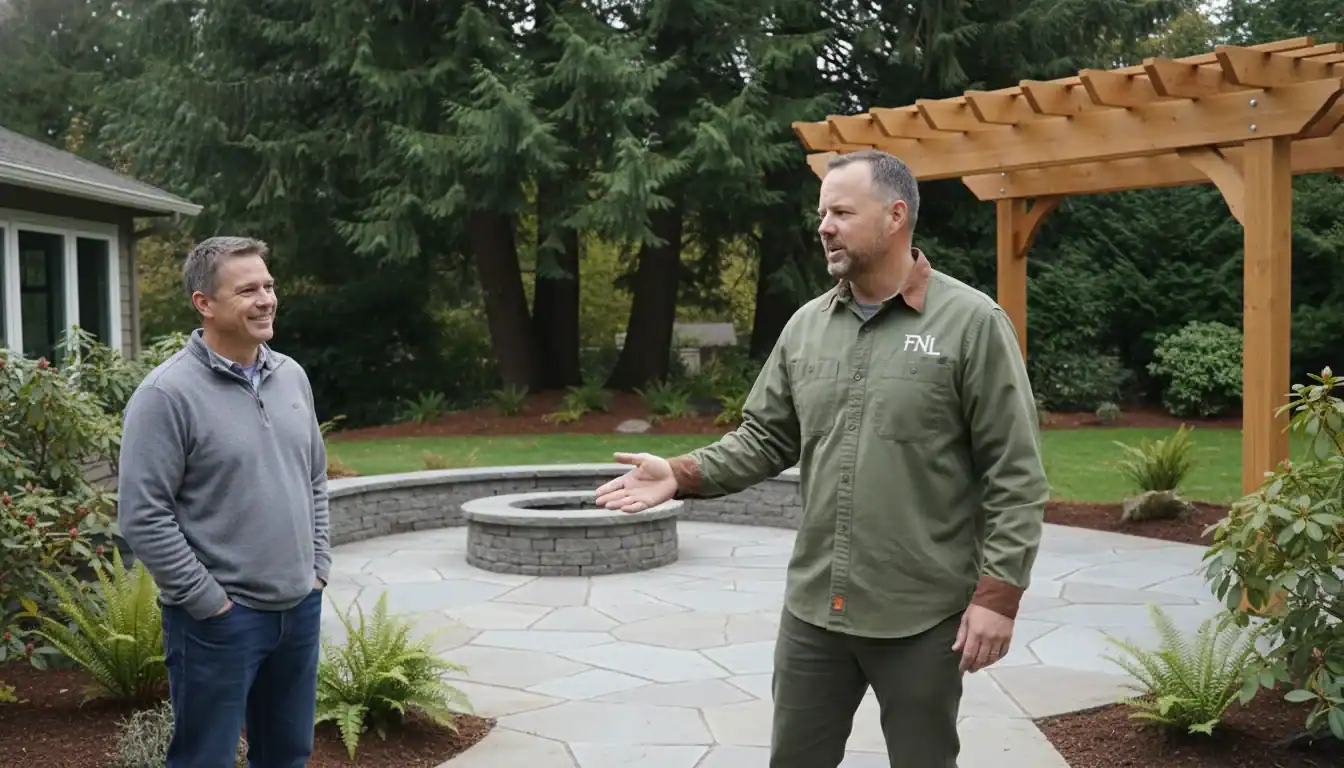
Yes, and I strongly encourage it. Our discovery consultation lets us understand your vision, assess your property, and discuss realistic outdoor room designs and budgets before any commitment is made.
5. Is a swimming pool a good investment for a Tacoma backyard?
A well-designed pool, whether a classic pool design, geometric pool, or infinity-edge pool, adds genuine enjoyment and can positively affect your home’s value. Our summers are shorter but spectacular, and a hot tub extends your pool area’s usefulness well into fall.
6. What design styles work best for Pacific Northwest outdoor spaces?
I have successfully executed everything from a Scandinavian patio with clean lines and natural elements to a contemporary patio remodel with porcelain pavers and cedar screens. The style that works best is the one that reflects how you actually live and connects naturally to your home’s architecture.
7. Can you design an outdoor office space as part of a larger backyard project?
Outdoor office spaces are one of the fastest-growing requests I receive, and yes, we incorporate them regularly. A well-positioned structure with natural light, weatherproof multimedia equipment, and reliable Wi-Fi access creates a genuinely productive freshair living setup.
8. How do I create better indoor-outdoor entertaining flow from my kitchen?
The most effective approach combines a well-positioned outdoor kitchen or bbq area with french doors or sliding or folding doors directly from your interior kitchen. Keeping floor levels consistent between indoor and outdoor spaces makes the transition feel natural and effortless.
9. Can Father Nature Landscapes handle complex or sloped Tacoma properties?
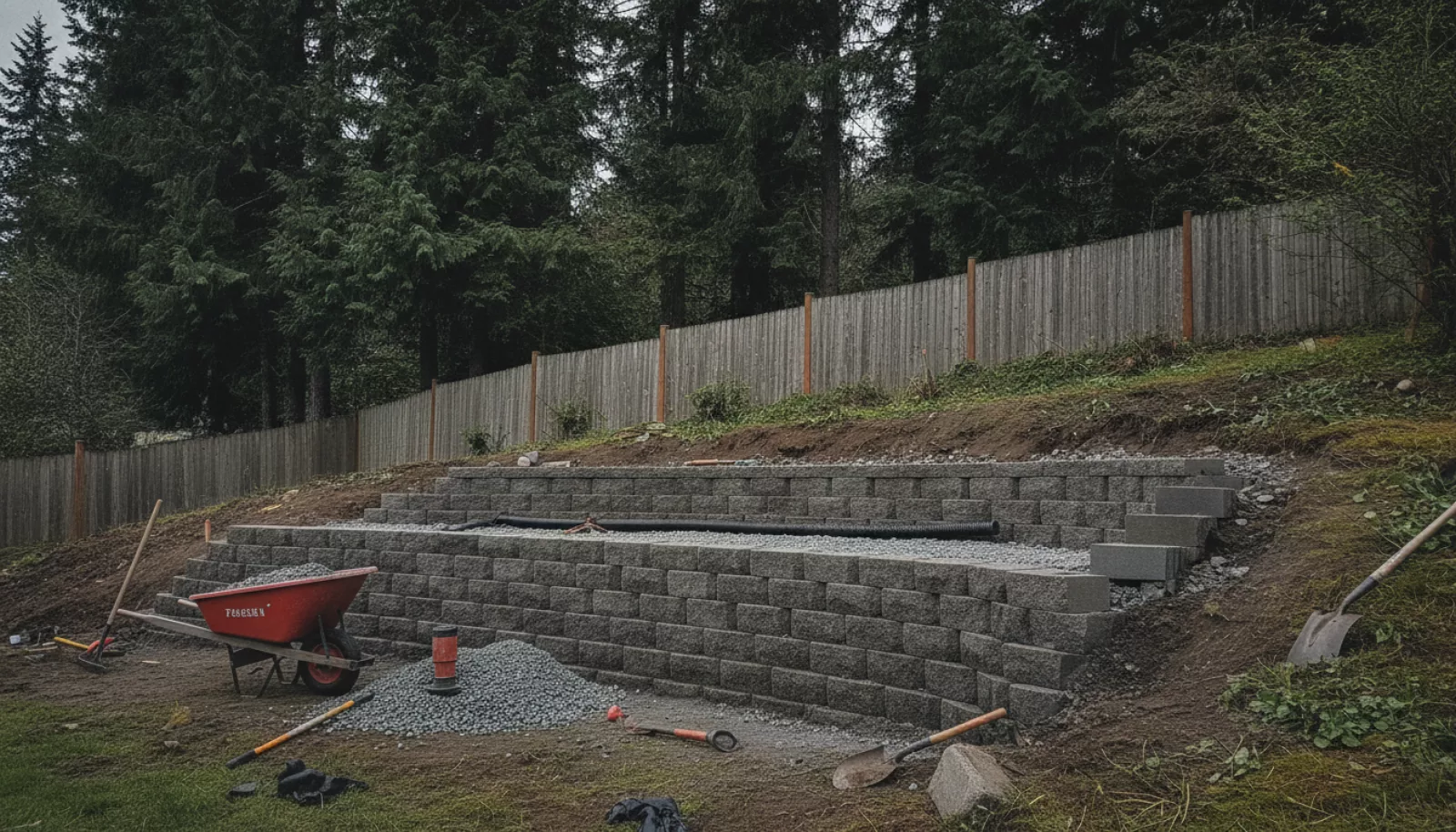
Sloped properties are something we have handled across hundreds of projects since 2006. Terraced outdoor dining areas, retaining walls using Belgard pavers or reclaimed brick, and multi-level hardscape solutions all work beautifully on challenging Tacoma and Gig Harbor terrain.
10. What makes Father Nature Landscapes different from other outdoor design services in the area?
We offer a complete design-build-maintain approach under one trusted team, which most competitors simply do not. From your first outdoor living blueprints through installation and ongoing maintenance, you work with the same uniformed crew that knows your property inside and out.
Conclusion
Your Tacoma backyard deserves more than good intentions. Outdoor living space design done right gives you a space your family actually uses, a property that appraises higher, and weekends you genuinely look forward to. Since 2006, we have helped hundreds of homeowners across Tacoma, Gig Harbor, and Puyallup stop guessing and start enjoying. We understand the Pacific Northwest climate, the soil, and most importantly, what you actually want from your outdoor space.