Tacoma gets hammered with rain every winter, and your yard pays the price. Standing water, soggy lawns, water pooling against your foundation – these are not just eyesores. They are signs of real drainage issues that get worse every season you ignore them. After 20 years of designing and installing landscape drainage solutions across Tacoma, Gig Harbor, and Puyallup, I have seen what works, what fails, and what saves homeowners from expensive water damage down the road. Let me guide you exactly how to fix it.
Chris’ Quick Takeaways
- Tacoma’s clay soil and 41 inches of annual rainfall make proper landscape drainage solutions a necessity, not a luxury.
- Always trace where water is actually coming from before choosing any drainage system.
- Fix your downspouts first. Every time.
- French drains solve the majority of yard drainage problems I see across Pierce County properties.
- Regrading your yard is often the most permanent fix available, especially near foundations.
- Rain gardens and permeable pavers are not just eco-friendly choices; they are genuinely effective outdoor drainage solutions for Western Washington.
- Getting drainage right the first time costs a fraction of what water damage repair demands later.
Tacoma Yards Struggle With Drainage More Than Most
What 41 Inches of Annual Rainfall Does to Clay-Heavy Soil
Tacoma averages 41 inches of rain annually according to NOAA climate records, and most of that rain lands on clay-heavy glacial soil that simply refuses to absorb it. I see this constantly across Pierce County properties. Clay soil holds water like a bathtub, leaving surface water flow with nowhere to go but sideways across your yard or straight toward your foundation.
Our Marine Climate Creates Year-Round Saturation Problems
Our marine climate means the ground rarely gets a real chance to dry out between rain cycles. By December, most Tacoma yards are already saturated from months of steady rainfall. That is the problem with year-round exterior drainage issues here. The soil never fully recovers, so each new storm hits ground that is already at complete capacity.
Damage Starts Long Before You See Standing Water
Water pooling on the surface is actually a late warning sign. Long before that happens, hydrostatic pressure is building against your foundation, soil erosion is quietly reshaping your yard, and drainage pipes beneath the surface may already be overwhelmed. A Gig Harbor homeowner in his late 50s once called us convinced his drainage issues were minor. Our topographical analysis revealed years of hidden water damage working against his foundation, damage that standing water alone had never shown him.
Read Your Yard Before Choosing Any Landscape Drainage Solutions
Five Warning Signs Tacoma Homeowners Miss Until It’s Too Late
Before investing in any yard drainage system, your yard is already telling you what it needs. Most homeowners just do not know how to listen. Watch for these five warning signs:
- Standing water that lingers 24 hours or more after rainfall stops
- Soil erosion patterns or bare patches forming along slopes or bed edges
- Basement water problems or foundation leaks after heavy rain
- Soggy, spongy lawn areas that stay soft well into spring weather
- Slip hazards forming on walkways, patios, or steps after storms
Spot two or more of these and your drainage issues are already overdue for a proper fix.
How to Trace Where Water Is Actually Coming From
Finding the root cause of a drainage problem is honestly more important than picking the solution. I always tell homeowners to walk their property during an actual rainstorm. Watch where water flows, where it slows, and where it collects. Check your downspouts, observe your surface water flow patterns, and note any areas where water seems to travel toward rather than away from your home.
The Same Problem Has Different Causes on Different Properties
Two yards with identical water pooling issues can have completely different root causes. One may need foundation grading repairs while the other needs a full yard drainage system installed beneath the surface. A University Place couple in their early 40s came to us frustrated after a neighbor recommended a dry well that did not solve their problem at all. Their land structure and geological shifting had created a completely different drainage setup than their neighbor’s property required, and only a site-specific plan fixed it.
Table: Tacoma Yard Drainage Warning Signs and What They Actually Mean
| Warning Sign | Likely Root Cause | Urgency Level | Recommended First Step |
|---|---|---|---|
| Standing water 24+ hours after rain | Clay soil saturation or blocked yard drain | High | Topographical analysis |
| Soggy lawn patches through spring | Poor surface water flow or high water table | Medium | Soil drainage assessment |
| Basement water problems after storms | Improper foundation grading or hydrostatic pressure | Very High | Foundation grading inspection |
| Soil erosion along slopes or beds | Surface runoff without erosion control system | Medium | Drainage swale or dry creek bed evaluation |
| Slip hazards on walkways and patios | Poor exterior drainage around hard surfaces | High | Channel and trench drain assessment |
| New wet patches in previously dry areas | Pipe failure or geological shifting underground | Very High | Professional drainage inspection |
| Pest activity increasing after rain | Standing water creating pest breeding grounds | Medium | Full yard drainage system review |
French Drains Still Solve the Most Common Yard Drainage Problems
How a French Drain Works and Why It Fits the PNW So Well
A French drain is a gravel-filled trench containing a perforated pipe that intercepts and redirects water flow away from problem areas. We use HDPE N-12 pipe and PVC drainage systems depending on the application and soil conditions. Given Tacoma’s clay soil and relentless rain cycles, a properly installed French drain is often the most reliable outdoor drainage solution available.
Where to Position a French Drain for Maximum Effectiveness
Placement is everything with French drains. I typically position them at the lowest point where water naturally collects, along property boundaries, or between a structure and a slope. The discharge location matters just as much as the trench itself. Getting water away from your foundation and toward a safe outlet is the entire goal of the drainage setup.
What Happens When a French Drain Is Installed Incorrectly
A poorly installed French drain can make your drainage issues significantly worse. Without proper landscape fabric lining, clay soil clogs the perforated pipe within a few seasons. According to Washington State Department of Commerce useful life tables, a correctly installed French drain lasts 20 to 30 years. A Tacoma homeowner in her mid-40s called us after another contractor’s French drain failed in under two years, installed without proper gravel depth, correct pipe slope, or landscape fabric. We rebuilt it properly and it has performed flawlessly since.
Other Drainage Systems Worth Knowing
Catch Basins and Channel Drains
Catch basins and channel and trench drains are the right call when water pools on driveways, patios, or other hard surfaces where a French drain simply cannot reach. A catch basin sits at the lowest point and collects surface water, feeding it into underground drain pipes. Long and narrow drains work particularly well along garage aprons and paved outdoor spaces where water has no natural escape route.
Dry Wells and Pop-Up Emitters
A dry well system collects water from drain pipes and disperses it slowly into the surrounding soil below the surface. I often pair NDS flow-wells with pop-up emitters to give collected water a controlled, clean discharge location. This combination works especially well in Puyallup and University Place properties where surface discharge options are limited but soil permeability below the clay layer is reasonable.
Swales and Dry Creek Beds
A drainage swale is a gently sloped channel that redirects surface water flow across or away from your property. Dry creek beds do the same thing while adding genuine visual appeal to your outdoor spaces. A retired couple in north Tacoma with a steeply sloped backyard wanted both erosion control and something beautiful. We designed a dry creek bed that solved their water diversion problem and became the favorite feature of their entire landscape.
Downspout Corrections
Before installing any drainage system, I always check the downspouts. Piped and buried downspouts, also called underground downspouts, move roof runoff away from your foundation through drain pipes rather than dumping it directly against your home. Corrugated metal pipes and PVC drainage systems both work well here. Skipping this step and going straight to a yard drain is one of the most expensive mistakes I see Tacoma homeowners make.
Regrading Your Yard Is Often the Most Permanent Landscape Drainage Solutions Fix
What Proper Yard Grading Actually Means
Foundation grading is not about making your yard flat. It is about deliberately shaping your land structure so water moves away from your home naturally through controlled surface water flow. Research consistently shows that 98% of U.S. basements experience water damage, and improper grading is one of the leading contributors. I have seen beautiful Tacoma properties with expensive landscaping completely undermined by a yard that simply slopes the wrong direction.
How Much Slope You Need and Where It Has to Go
Getting the slope right is more precise than most homeowners expect. Here is what proper grading requires as a general standard:
- A minimum slope of 6 inches over the first 10 feet away from your foundation
- Consistent grade maintained across the entire yard perimeter, not just one side
- Grading repairs that account for settled soil, geological shifting, and existing hardscaping materials
- Water diversion directed toward street drains, drainage swales, or designated discharge locations
Every inch of slope counts when Tacoma’s rain cycles hit back to back through winter.
When Regrading Should Be Combined With an Underground System
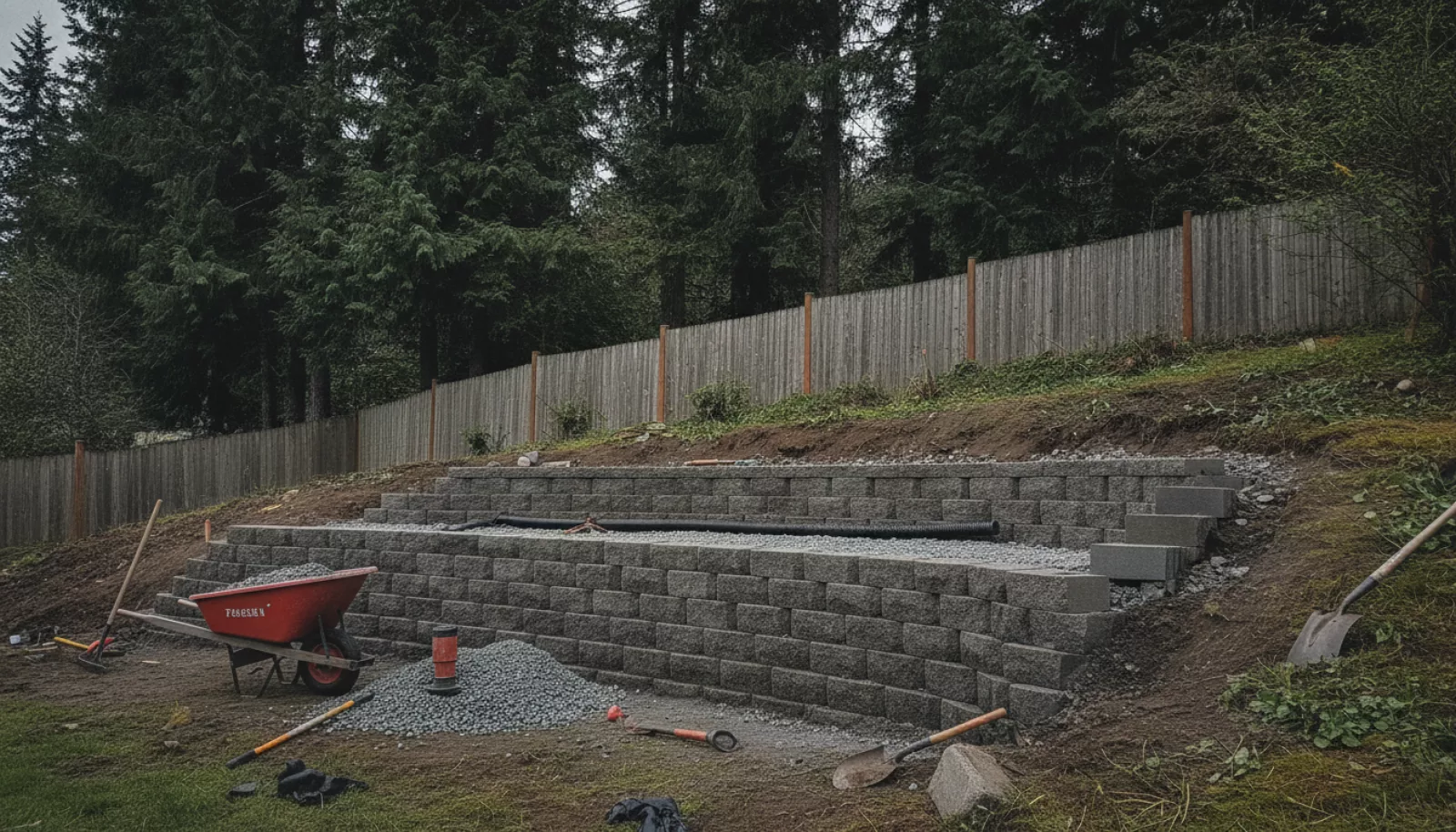
Sometimes regrading alone is not enough, particularly on properties with heavy clay soil or complex land structure. In those situations, I combine foundation grading with an underground yard drainage system for a complete advanced drainage solution. A young family in Puyallup with a low-lying backyard and persistent basement water problems needed exactly this approach. Grading repairs redirected surface flow while a buried perforated pipe system handled what the soil simply could not absorb on its own.
Rain Gardens and Eco-Friendly Drainage Options That Work in Western Washington
Rain Garden Functions as a Living Drainage System
A rain garden is a shallow, planted depression that collects stormwater runoff and allows it to slowly absorb into the ground rather than pooling or running off. According to U.S. EPA research, rain gardens absorb runoff 30 to 40% more efficiently than a conventional lawn. A peer-reviewed study found that a monitored rain garden network retained more than 50% of total stormwater volume, with 90% of all rainfall events fully detained within the gardens. For Western Washington homeowners, this is one of the most practical and beautiful outdoor drainage solutions available.
The Best Native PNW Plants for Wet, Poorly Draining Areas
Choosing the right plants turns a drainage problem into a breathtaking space. I always recommend natives for wet areas because they are already adapted to our rain cycles and clay soil conditions. Here are my top choices for poorly draining Tacoma landscapes:
- Red osier dogwood (Cornus sericea) for low-lying wet zones
- Slough sedge (Carex obnupta) for consistently saturated soil edges
- Western skunk cabbage (Lysichiton americanus) for standing water areas
- Blue wild rye (Elymus glaucus) for transitional slope and erosion control zones
- Oregon grape (Mahonia aquifolium) for moderately wet beds needing structure
These plants deliver both form and function while requiring far less maintenance than non-native alternatives.
Permeable Paving Options That Reduce Runoff at the Source
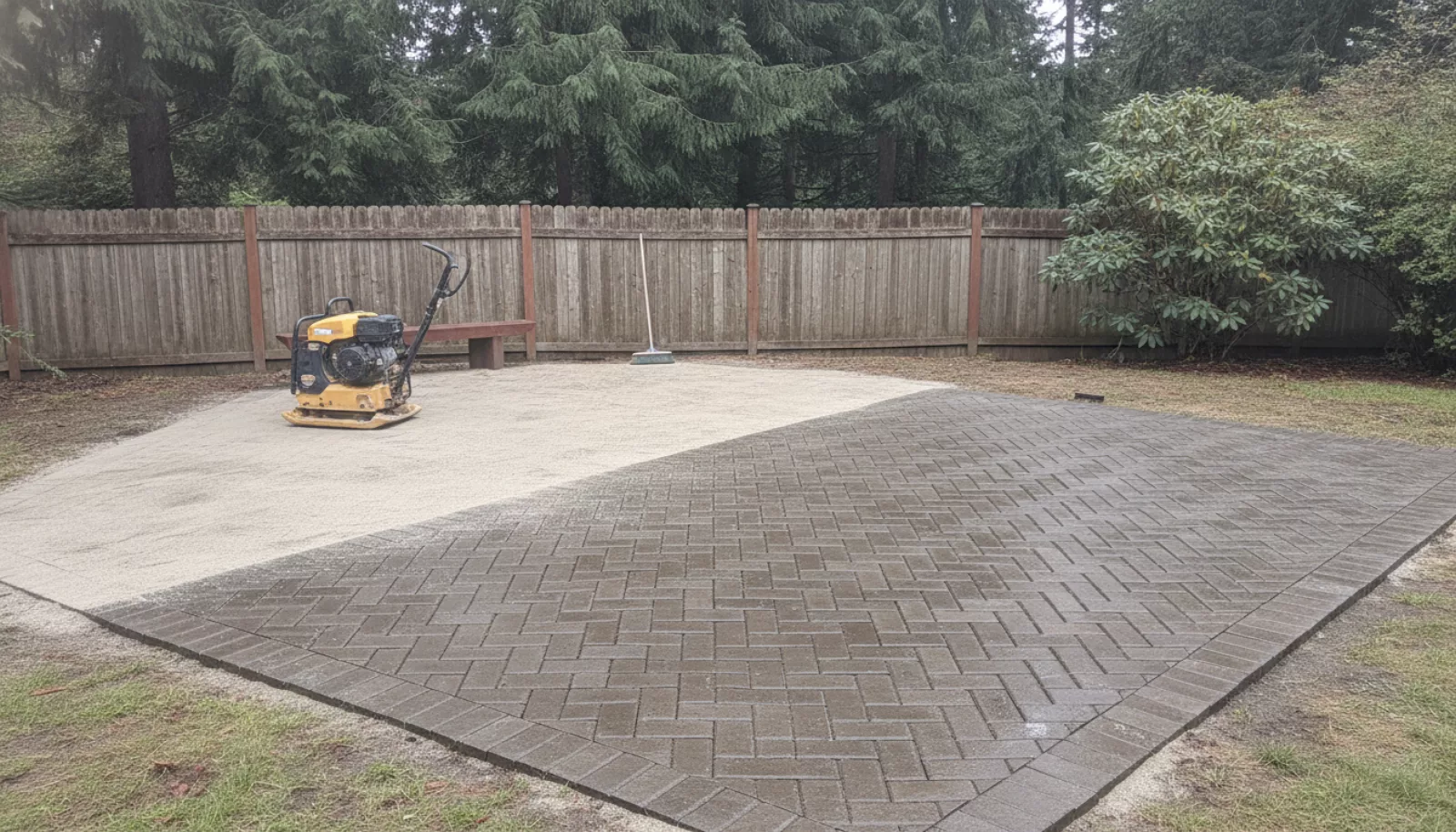
Permeable pavers are one of the smartest pieces of built-in drainage you can add to a landscape design. Rather than shedding water onto your lawn or toward your foundation, permeable hardscape allows rainfall to pass directly through the surface and into a prepared gravel base below. A Gig Harbor landscape designer couple in their early 50s, passionate about sustainable outdoor spaces, asked us to replace their solid concrete driveway with permeable pavers as part of a broader hardscaping services project. The runoff reduction was immediate and measurable, and the driveway looked significantly better than what it replaced.
What Landscape Drainage Solutions Actually Cost – And What Affects the Price
Typical Cost Ranges by System Type
Drainage costs vary widely depending on the system, and I want to give you real numbers rather than vague estimates. Here is what most Tacoma homeowners can expect to invest based on current 2024 to 2025 contractor pricing:
| System Type | Typical Cost Range |
|---|---|
| French Drain | $1,000 – $4,000 |
| Catch Basin / Yard Drain | $500 – $2,500 |
| Dry Well System | $1,000 – $3,500 |
| Drainage Swale | $500 – $1,800 |
| Permeable Pavers | $10 – $30 per sq ft |
| Full Yard Regrading | $1,000 – $5,000+ |
| Underground Downspouts | $300 – $1,500 |
These are starting points. Your specific property, soil conditions, and drainage setup will influence the final number significantly.
The Site Factors That Drive Costs Up in Tacoma
Several Tacoma-specific conditions can push drainage costs beyond baseline estimates. Clay soil requires more excavation effort and specialized materials like HDPE N-12 pipe or corrugated metal pipes that handle ground movement better than standard drain pipes. Properties with significant slopes, mature tree roots, or existing hardscaping materials that need removal add labor time considerably. Contractor-grade trenching gear is sometimes necessary on compacted glacial soil, which affects both project timelines and overall pricing.
Getting Drainage Right the First Time Saves Serious Money
Cutting corners on landscape drainage is genuinely one of the costliest mistakes a homeowner can make. The average U.S. homeowner insurance payout for water damage runs $13,954 per claim, and water damage affects roughly 14,000 people every single day nationwide. A Tacoma homeowner in his early 60s, a retired engineer who prided himself on DIY projects, spent two seasons attempting his own drainage fixes before calling us. By the time we assessed the property, foundation leaks and soil erosion had created repair costs that dwarfed what a professional drainage system would have cost from the start.

How to Maintain Your Drainage System So It Lasts Decades
What to Inspect Every Fall Before the Rainy Season Hits
A Washington State Department of Commerce useful life table confirms that properly maintained French drains last 20 to 30 years. The word “maintained” is doing a lot of heavy lifting in that sentence. I recommend every Tacoma homeowner do a thorough drainage inspection each fall before the rainy season arrives, because fixing a small issue in October costs a fraction of what flooding in December demands.
Clearing Debris, Flushing Pipes, and Checking Outlets
This is the hands-on part of drainage maintenance that most homeowners skip until something goes wrong. Here is what I walk through every season on properties we service across Tacoma, Gig Harbor, and Puyallup:
- Clear leaves and debris from all catch basin grates and yard drain covers
- Flush drain pipes with a garden hose to check for blockages and confirm water flow
- Inspect pop-up emitters and sump pump discharge outlets for clogs or damage
- Check underground downspouts for root intrusion or joint separation
- Examine landscape fabric around French drains for signs of soil migration or collapse
Permeable pavement systems, according to a 2024 peer-reviewed study, begin losing effectiveness after 5 to 10 years without regular maintenance. Staying ahead of that curve protects your entire investment.
Signs Your Existing System Needs Professional Attention
Some drainage problems go beyond what a garden hose and a Saturday afternoon can fix. A Puyallup homeowner in her late 30s, who had maintained her own yard drain system diligently for years, noticed water pooling returning near her back patio despite her regular upkeep. It turned out her perforated pipe had partially collapsed under the weight of heavy equipment used during a neighboring construction project. Watch for these warning signs that your system needs professional eyes on it rather than another DIY attempt:
- Standing water returning to areas your system previously handled without issue
- Unusual wet patches appearing in new locations after rain
- Visible soil erosion forming around drain pipe outlets or along swale edges
- Sump pump discharge backing up or running continuously after storms stop
Table: Seasonal Drainage Maintenance Checklist for Tacoma Homeowners
| Task | When to Do It | DIY or Professional | What to Look For |
|---|---|---|---|
| Clear catch basin and yard drain grates | Every fall and after major storms | DIY | Leaf buildup, debris blockage, standing water above grate |
| Flush drain pipes with garden hose | Every fall | DIY | Slow drainage, backflow, or no water movement at outlet |
| Inspect pop-up emitters and discharge locations | Every fall and spring | DIY | Cracks, clogs, or emitter stuck in closed position |
| Check underground downspouts for joint separation | Every fall | DIY | Wet soil directly above buried pipe line |
| Examine landscape fabric around French drains | Every 2 to 3 years | Professional | Soil migration into gravel layer, surface collapse |
| Camera inspect perforated pipe interior | Every 5 years | Professional | Root intrusion, pipe collapse, sediment buildup |
| Full system performance assessment | Every 5 to 7 years | Professional | Reduced effectiveness, new water pooling, erosion returning |
How Father Nature Landscapes Solves Drainage Problems
Our Assessment Process
We never guess. Every drainage project starts with a thorough topographical analysis and a site-specific plan built around your property’s unique land structure, soil conditions, and water flow patterns. No two yards are the same, and neither are our custom drainage plans.
Our 20 Years of PNW Experience Changes What We Recommend
Since 2006, we have solved drainage problems across 500+ Tacoma, Gig Harbor, and Puyallup properties. That experience tells us immediately which landscape drainage solutions fit your specific situation and which ones will fail in our climate. Here is what sets our approach apart:
- Deep familiarity with Pierce County clay soil and glacial hardpan conditions
- Proven expertise across every system type, from French drains to permeable hardscape
- Licensed, bonded, and insured uniformed crews who show up on schedule, every time
- Comprehensive design-build-maintain approach under one trusted team
- 200+ five-star reviews from homeowners across our service area
What Our Clients Say After a Proper Drainage Installation
Our clients describe the difference simply. They went from dreading every rainstorm to barely thinking about their yard drainage system at all. That worry-free peace of mind is exactly what professional outdoor drainage solutions should deliver, and it is what we have been providing since 2006.
Frequently Asked Questions
1. Can I install landscape drainage solutions myself or do I need a professional?
Simple downspout extensions are manageable DIY fixes. Anything involving perforated pipe, underground systems, or foundation grading really needs professional drainage guidance to avoid costly mistakes.
2. How do I know if my drainage problem is affecting my foundation?
Watch for foundation leaks, basement water problems, or efflorescence on interior walls after heavy rain. These are signs that hydrostatic pressure has been building long enough to warrant professional waterproofing services alongside exterior drainage work.
3. Is drain tile the same thing as a French drain?
Drain tile is actually the original term for what we now commonly call a French drain. Modern systems use perforated pipe instead of clay tiles, but the water diversion principle remains identical.
4. Can poor yard drainage actually attract pests?
Absolutely. Standing water and consistently saturated soil create ideal pest breeding grounds for mosquitoes, gnats, and other insects. Solving your drainage issues removes the conditions these pests depend on entirely.
5. Does a rain barrel help with yard drainage problems?
A rain barrel captures roof runoff before it hits the ground, which reduces the volume of water your yard drainage system has to handle. It works best as one part of a broader outdoor drainage solutions strategy rather than a standalone fix.
6. Should drainage always be part of a new landscape project from the start?
Yes, always. Incorporating built-in drainage during the planning phase of landscape projects costs significantly less than retrofitting a system after installation. Water erosion and soil movement are far easier to prevent than repair.
7. Do interior drains solve the same problems as exterior landscape drainage?
Interior drains and basement waterproofing manage water after it has already entered your home. Exterior landscape drainage solutions stop water at the source, which is always the more effective and less disruptive long-term approach for Tacoma homeowners.
Conclusion
Tacoma’s rain is not going anywhere, and neither are drainage problems that go unaddressed season after season. The good news is that every drainage issue I have seen across 20 years and 500+ projects in Tacoma, Gig Harbor, and Puyallup has a real, lasting solution. You just need the right one for your specific property. Our team is ready to assess your yard and build a plan that actually works.