By Chris Sheer, Co-owner, Father Nature Landscapes of Tacoma
Professional landscape design typically costs $1,900 to $7,200, but it prevents mistakes that force you to redo entire sections of your outdoor space. I’ve watched hundreds of Tacoma homeowners wrestle with this decision over 18 years, and the answer isn’t always “hire a pro.”
Some projects genuinely work as DIY efforts. Others become expensive regrets the moment you break ground. The difference comes down to your property’s complexity, your realistic skill level, and what you’re actually planning to build. Spring planting season starts soon, so let’s figure out which path makes sense for your yard.
Chris’ Quick Takeaways
- DIY works for single planting beds and seasonal refreshes, but slopes, drainage, and hardscape need professional eyes
- Most homeowners underestimate design time by 300% and material costs by 40% on DIY projects
- Professional design ($1,900-$7,200) prevents $10,000+ in installation mistakes and material waste
- Plant selection based on appearance instead of climate compatibility kills half of DIY landscapes within two years
- Winter design booking gets you ready for spring installation before contractors fill their schedules
- 3D visualization shows your outdoor space at maturity so you avoid buyer’s remorse and spacing disasters
- Design-build-maintain under one team eliminates the miscommunication that plagues multi-contractor projects
Table of Contents
- Chris’ Quick Takeaways
- What Makes Landscape Design More Complex Than Most Homeowners Expect
- The True Cost of DIY Landscape Design (Time, Money, and Frustration)
- Professional Landscape Design Costs Less Than You Think
- Projects You Can Realistically Handle Yourself Without Regret
- Red Flags That Scream Your Project Needs A Professional
- Why Most DIY Landscape Designs Fail Within Two Years
- How Professional Designers Actually Work (And What You Really Get)
- How Father Nature Landscapes Makes Professional Design Accessible
- Frequently Asked Questions
- Conclusion
Young caucasian woman holding hedge trimmer at green conifers
What Makes Landscape Design More Complex Than Most Homeowners Expect
Site Analysis Goes Far Beyond Picking Pretty Plants
We start every project by spending hours analyzing sunlight patterns, soil composition, and existing drainage before we even think about plant selection. Most DIYers skip straight to browsing garden magazines and picking flowers they like, then wonder why half their new planting beds fail within a season.
Drainage and Grading Problems Most DIYers Miss Until It’s Too Late
Water flows downhill, but figuring out where it goes on your property requires more than eyeballing slopes. I’ve watched homeowners install beautiful flagstone pathways only to discover they’ve created a dam that floods their foundation during Pacific Northwest rainstorms, requiring expensive French drain installations to fix.
How Plant Selection Mistakes Cost Thousands in Replacements
A Gig Harbor couple spent $4,200 on mature shrubs in 2023, planting sun-loving perennials in shaded areas and moisture-hungry plants where drainage was poor. Within 18 months, they’d lost 60% of their investment. Smart plant palette selection matches species to your specific site conditions, not just aesthetic preferences.
The Hidden Engineering Behind Hardscape Features
That granite block patio you’re picturing needs proper base preparation, compaction, and drainage infrastructure underneath. I’ve seen dozens of DIY patios and walkways that cracked, settled, or pooled water because homeowners didn’t account for frost heave, load-bearing requirements, or the engineering behind hard surfaces.
The True Cost of DIY Landscape Design (Time, Money, and Frustration)
How Many Hours You’ll Actually Spend on a DIY Design Project
Most homeowners estimate 10-15 hours for their outdoor space design. The reality? You’ll spend 40-60 hours minimum researching plant combinations, learning design software, measuring your property, and revising plans. That’s eight full weekends gone before you’ve even purchased a single plant or broken ground.
Software and Tools That Seem Free But Add Up Fast
Free tools like SketchUp get you started, but you’ll quickly hit paywalls for essential features. Here’s what DIYers actually spend on design tools:
- Planner 5D premium subscription for 3-dimensional rendering ($10-25/monthly)
- Site plan software with accurate measurements ($50-200)
- Graph paper, Apple Pencils, and drawing apps ($40-80)
- Plant encyclopedia apps and garden design books ($60-150)
The Expensive Materials You’ll Buy Twice After Getting It Wrong
A University Place homeowner bought $1,800 in decorative gravel for walkways in 2022, only to realize it shifted and scattered everywhere. He spent another $2,400 on crushed granite walkways the second time. Wrong material choices, improper quantities, and miscalculated spacing mean buying twice.
What Happens When Your DIY Design Doesn’t Account for Pacific Northwest Winters
You pick plants that look gorgeous in summer but turn into brown mush after our first hard freeze. Non-native species that can’t handle wet winters die off, and hardscape elements without proper drainage crack from freeze-thaw cycles, forcing complete reinstallation.
Professional Landscape Design Costs Less Than You Think
What $2,000 to $7,000 Actually Gets You from a Professional Designer
Professional design includes 3D visualization so you see exactly what you’re getting, a complete plant palette matched to your site conditions, hardscape structure planning with proper drainage, and phased implementation plans that spread costs across seasons. You’re buying horticultural wisdom and engineering expertise, not just pretty drawings.
How Professional Design Prevents $10,000+ Installation Mistakes
I’ve watched DIYers install irrigation systems in the wrong zones, build retaining walls without proper footings, and place water features where they collect debris. Each mistake costs $3,000-$8,000 to fix. Professional site plans catch these issues on paper, where corrections cost nothing instead of thousands.
The Property Value Increase That Pays for Design Fees
A Puyallup family invested $5,200 in professional design for their front yard landscaping in 2021, then sold their home two years later. Their realtor attributed $18,000 of the sale price premium directly to the landscaping makeover. Quality outdoor plans typically return 100-200% of design costs in property value.
Why Tacoma Homeowners Book Design Services in Winter for Spring Projects
Smart homeowners book design consultations in January and February, giving designers time to create detailed plans before spring planting season hits. You’ll have your complete plant selection, material lists, and installation schedule ready the moment weather permits, instead of scrambling in April when contractors are booked solid.
Table: DIY vs. Professional Landscape Design Cost Comparison
| Project Stage | DIY Cost | DIY Time Investment | Professional Cost | Professional Time Investment |
|---|---|---|---|---|
| Design & Planning | $150-400 (software, tools, books) | 40-60 hours | $1,900-7,200 | 2 hours (your time) |
| Site Analysis | $0 (guesswork) | 8-12 hours | Included in design | 0 hours |
| Material Sourcing | Retail prices + 15-25% waste | 12-20 hours | Wholesale pricing, accurate quantities | 0 hours |
| Plant Selection | Trial and error, 30-50% failure rate | 10-15 hours research | Climate-matched, 5-10% failure rate | 1 hour |
| Installation Labor | Your weekends for 4-8 weeks | 80-160 hours | $8,000-25,000 (depending on scope) | 0 hours |
| Correcting Mistakes | $3,000-12,000 average | 40-80 hours | Minimal, covered by warranty | 0 hours |
| Total Investment | $11,000-30,000+ | 190-347 hours | $15,000-40,000 | 5 hours oversight |
Projects You Can Realistically Handle Yourself Without Regret
Single Garden Bed Additions and Plant Refreshes
Adding one new planting bed along your fence line or refreshing an existing bed with new perennial shrubs works well as a DIY project. You’re working with manageable scale, minimal site preparation, and straightforward plant combinations. Just make sure you’re matching your plant palette to existing sun and soil conditions.
Small Patio or Walkway Additions Under 200 Square Feet
A simple 10×15 foot paver patio or short garden pathway using basic materials stays within DIY capabilities. Anything larger requires grading expertise, proper base preparation, and drainage planning that most homeowners lack. Stick to flat areas without slope or drainage issues, and you’ll probably end up satisfied.
Seasonal Color Updates and Container Garden Plans
Swapping out annuals for seasonal landscape interest or arranging container gardens on your existing hardscape elements makes perfect sense as DIY work. A Tacoma homeowner in her mid-50s spends about four hours twice yearly refreshing flower bed borders and pots, keeping her outdoor space vibrant without major investment or risk.
The One Rule That Tells You When DIY Actually Makes Sense
If your project involves moving dirt, changing grades, installing drainage, or building anything structural, hire professionals. Simple additions to flat ground using plants or materials you can easily replace if wrong? Go ahead and DIY. That’s the line between weekend satisfaction and expensive regret.
Red Flags That Scream Your Project Needs A Professional
Any Slope or Elevation Change Across Your Property
Grading and drainage become exponentially complex with even minor slopes. Water accelerates downhill, eroding soil and undermining hardscape features you install. I’ve seen beautifully designed DIY gardens on slopes wash away during their first Pacific Northwest winter because the homeowner didn’t account for runoff velocity and erosion control.
Existing Drainage Issues or Standing Water Problems
If you already have puddles, soggy spots, or water pooling near your foundation, adding landscaping without fixing the underlying problem makes everything worse. You need proper French drain systems, grading corrections, and sometimes underground drainage infrastructure. DIY attempts at drainage fixes almost always fail and cause foundation damage.
Projects Involving Retaining Walls or Structural Elements
A Gig Harbor homeowner in 2020 built his own timber retaining wall to create level planting beds on a hillside. Three winters later, the wall bowed outward and partially collapsed under soil pressure. Retaining walls require engineering calculations for:
- Proper footing depth below frost line
- Drainage behind the wall structure
- Load-bearing capacity for soil weight
- Anchoring systems for walls over 3 feet
Plans That Include Irrigation Systems or Outdoor Lighting
Irrigation zone planning, water pressure calculations, and electrical work for outdoor lighting require technical expertise and often permits. You’ll spend weeks learning what professionals already know about head spacing, valve placement, and transformer sizing. Plus, mistakes mean digging up your finished landscaping to fix buried lines.
Table: When to DIY vs. When to Hire a Pro (Project Decision Matrix)
| Project Type | Complexity Level | DIY Friendly? | Professional Recommended? | Why |
|---|---|---|---|---|
| Single garden bed addition (flat ground) | Low | ✓ Yes | Optional | Minimal site prep, easy plant replacement if wrong |
| Seasonal color refresh | Low | ✓ Yes | No | Simple plant swaps, low risk |
| Small patio under 200 sq ft (flat area) | Medium | Maybe | Recommended | Base preparation tricky, but manageable on flat ground |
| Any project on sloped property | High | ✗ No | ✓ Required | Drainage and erosion control require engineering |
| Retaining walls over 2 feet | High | ✗ No | ✓ Required | Structural failure risk, permits needed |
| French drain or drainage systems | High | ✗ No | ✓ Required | Underground work, grading expertise essential |
| Irrigation system installation | High | ✗ No | ✓ Required | Zone planning, pressure calculations, permits |
| Complete yard redesign | High | ✗ No | ✓ Required | Too many interdependent systems to risk mistakes |
| Water features or ponds | Medium-High | ✗ No | ✓ Required | Plumbing, electrical, drainage complexity |
| Front yard makeover | Medium | Maybe | ✓ Recommended | High visibility, impacts property value significantly |
Why Most DIY Landscape Designs Fail Within Two Years
Plants Chosen for Appearance Instead of Climate Compatibility
You fall in love with photos of desert succulents or tropical flowers, then try forcing them into Tacoma’s wet winters and cool summers. Native plants and Pacific Northwest-adapted species thrive with minimal care, but Instagram-worthy exotics from different climate zones require constant babying and still fail when temperatures drop.
Spacing Mistakes That Create Overcrowded Jungles
Most DIYers plant shrubs 18 inches apart because they look sparse at nursery size. Three years later, your carefully planned planting beds become impenetrable thickets where nothing gets enough light or air circulation. Professional plant pairings account for mature spread, giving each species room to reach full size without crowding neighbors.
Missing the Seasonal Flow That Keeps Interest Year-Round
Your outdoor space looks stunning in June when everything blooms, then becomes a boring sea of green the other eleven months. A University Place couple in their early 40s created a beautiful flower garden in 2021, but by fall they realized they’d picked only spring bloomers, leaving their yard dull through summer and autumn.
Ignoring Mature Plant Sizes and Growth Rates
That cute three-foot shrub you planted near your foundation? It’s actually a fifteen-footer at maturity. I’ve watched homeowners spend thousands removing plants that outgrew their spaces, blocking windows and cracking foundations. Garden catalogs show young plants, but professionals know the ten-year reality.
How Professional Designers Actually Work (And What You Really Get)
The 3D Visualization That Eliminates Guesswork and Buyer’s Remorse
Professional 3D visualization software shows you exactly how your outdoor space will look at maturity, not just at installation. You’ll see your plant palette at full size, hardscape elements from multiple angles, and seasonal changes throughout the year. No more wondering if that patio feels too small or those shrubs block your view.
Master Planning That Phases Your Budget Across Multiple Seasons
Smart designers create phased implementation plans that break large projects into manageable chunks. Install hardscape structure this spring, add planting beds next fall, incorporate water features the following year. A Puyallup family with a $45,000 total budget spread their backyard makeover across three years, maintaining cash flow without compromising the overall design vision.
Access to Trade-Only Plants and Materials You Can’t Buy Retail
We source from wholesale nurseries and specialty growers you’ll never find at big-box stores. That means healthier specimens, unusual native plants perfect for Pacific Northwest conditions, and premium materials at better prices than retail. Your neighbors can’t replicate your look because they literally can’t access the same plant encyclopedia we use.
The Ongoing Support That Protects Your Investment Long-Term
Professional relationships don’t end at installation. You get expert advice when plants show stress, guidance on seasonal care adjustments, and solutions when unexpected issues arise. That ongoing support means your landscape investment thrives for decades instead of struggling because you’re guessing at every maintenance decision.
How Father Nature Landscapes Makes Professional Design Accessible
Our Free Consultation Process and What Happens During Your First Visit
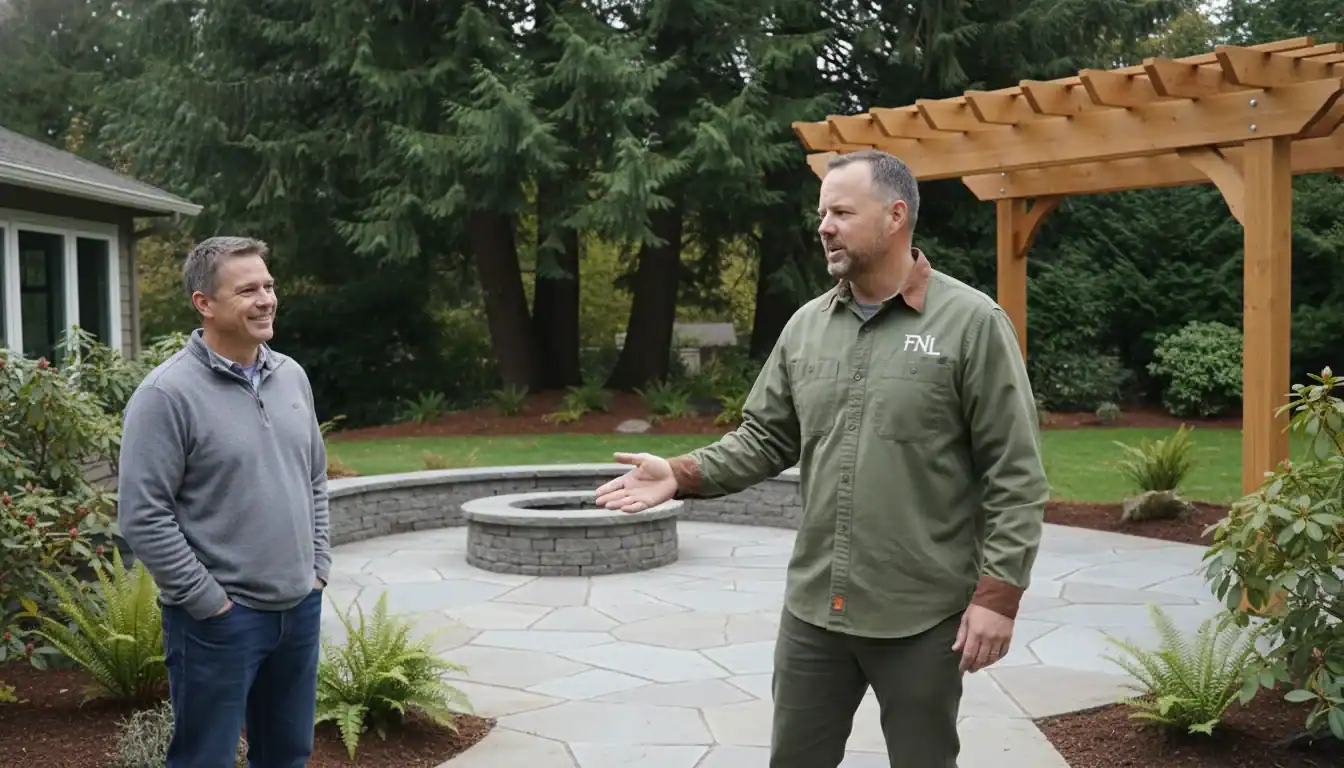
We start with a no-pressure site visit where I walk your property, listen to your vision, and identify opportunities and challenges you might not see. You’ll get honest feedback about what’s realistic for your budget, timeline, and maintenance preferences. No sales pitch, just straightforward guidance from someone who’s designed 500+ outdoor spaces.
Design-Build-Maintain Under One Team Since 2006
Most homeowners hire a designer, then scramble to find contractors who understand the plan, then search for maintenance help after installation. We handle everything from initial 3D visualization through installation and ongoing care. One team, one relationship, zero miscommunication between parties who’ve never worked together before.
Our Work On Tacoma Properties
We’ve created front yard landscaping that increased sale prices by $20,000, backyard makeovers that turned unusable slopes into family gathering spaces, and side yard transformations that solved chronic drainage issues. Our portfolio spans every property type and budget level across Tacoma, with documented results you can see.
Frequently Asked Questions
1. What’s the biggest mistake DIYers make when designing their own landscape?
Skipping proper site analysis and jumping straight to plant selection. Most homeowners pick plants based on appearance without checking sunlight patterns, drainage conditions, or soil quality. That’s why half of DIY landscapes need major corrections within two years.
2. How long does professional landscape design typically take from consultation to final plans?
Most residential projects take 2-4 weeks from initial consultation to finished design plans. Complex properties with drainage issues, significant slopes, or elaborate hardscape features might need 4-6 weeks. We work faster in winter when demand is lower before spring planting season.
3. Can I use free design software like SketchUp for serious landscape planning?
Free tools work fine for basic layouts and rough concepts, but they lack plant libraries, accurate 3D visualization, and drainage planning features. You’ll hit frustrating limitations quickly. Professional software costs $200-500 annually and has a steep learning curve most homeowners don’t want to climb.
4. Do I need permits for DIY landscape projects in Tacoma?
Retaining walls over 4 feet, irrigation systems, outdoor lighting, and major grading work typically require permits. Simple planting beds, small patios under 200 square feet, and garden bed additions usually don’t. Check with Tacoma’s building department before starting any hardscape or structural work.
5. How much should I budget for a professional landscape design in the Tacoma area?
Expect $1,900-$7,200 for professional design services depending on property size and project complexity. Simple front yard designs run $2,000-$3,500, complete property master plans cost $5,000-$7,200. That investment prevents $10,000+ in installation mistakes and material waste.
6. What’s the best time to start planning landscape projects for spring installation?
January through February is ideal for design planning. You’ll have your complete plans, material selections, and installation schedule ready before contractors book solid in March and April. Early planning also gives you first pick of quality plants from nurseries before spring inventory sells out.
7. Can I hire a designer just for plans and handle installation myself?
Absolutely, though most homeowners underestimate installation complexity once they see detailed plans. We offer design-only services if you want to DIY the installation. Just know that professional installation typically costs less than DIY once you factor in tool rentals, material waste, and your time value.
Conclusion
You don’t need to guess whether DIY or professional design makes sense for your outdoor space. After 18 years and 500+ projects across Tacoma, Gig Harbor, and Puyallup, I’ve seen which projects succeed as DIY efforts and which ones become expensive regrets. We’re here to give you honest guidance, not push services you don’t need.
Book a free consultation now. Let’s figure out the smartest path for your property before spring planting season arrives.